Why Choose CellPeptides’ GLOW?
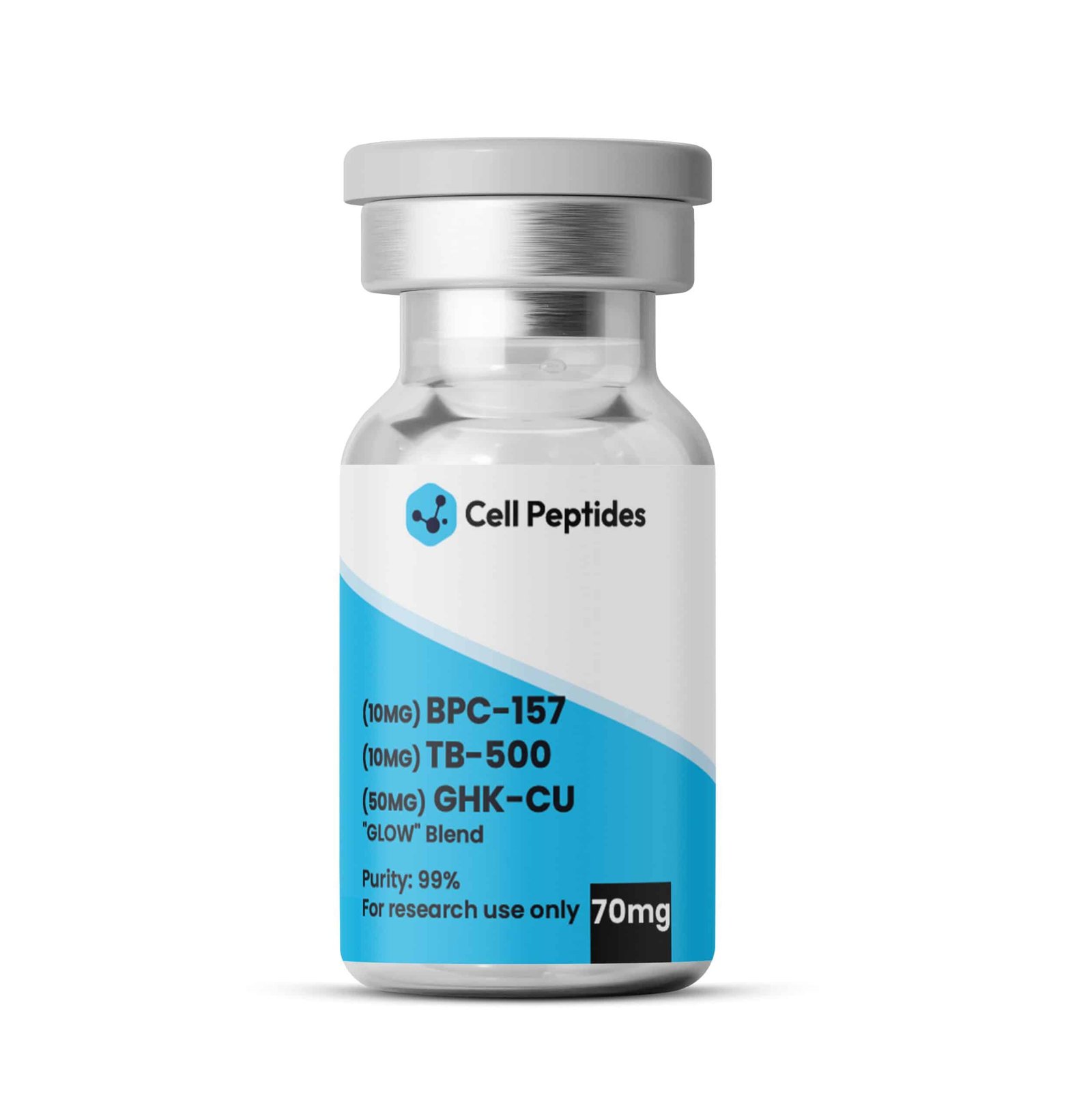
Study designs that employ peptide blends — rather than a single peptide — can only yield successful results if there’s absolute consistency. Ratio fluctuations invalidate your study and the combined effect of BPC-157, TB-500, and GHK-Cu.
With CellPeptides, you get the optimized ratio intended for serious peptide research. Every time. Our GLOW blend is:
- Pharma-grade — synthesized to ≥99% purity and made in the EU.
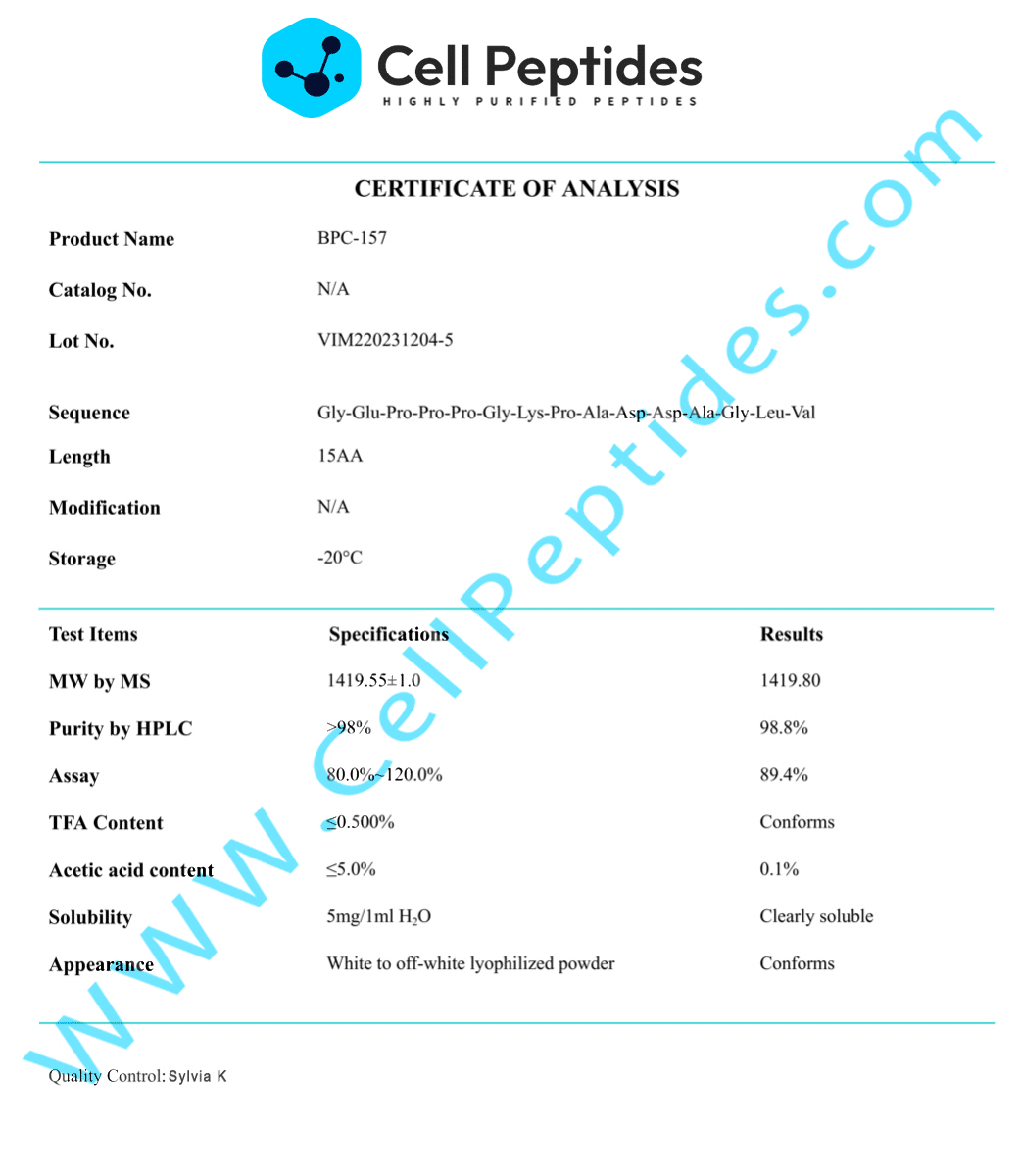
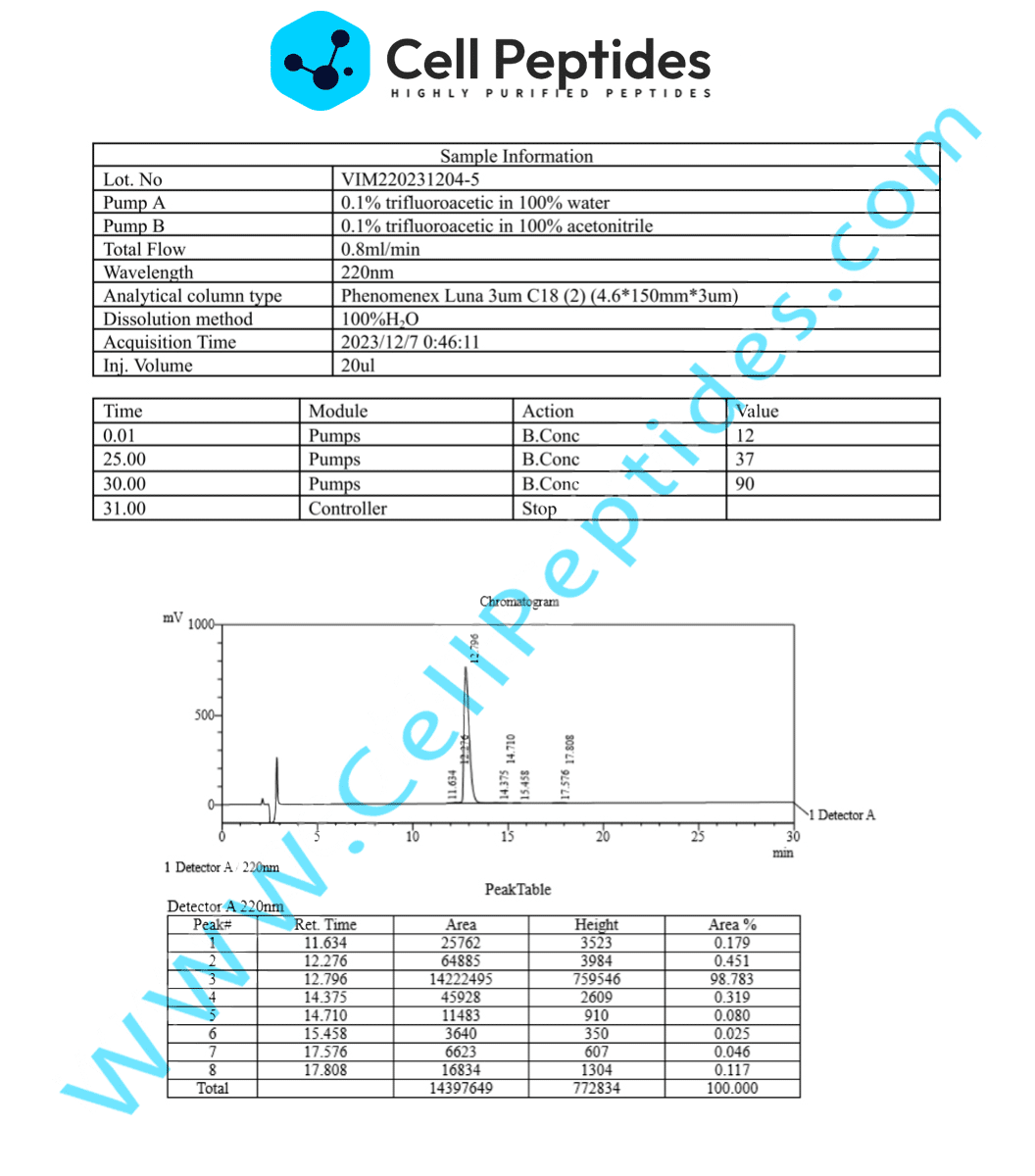
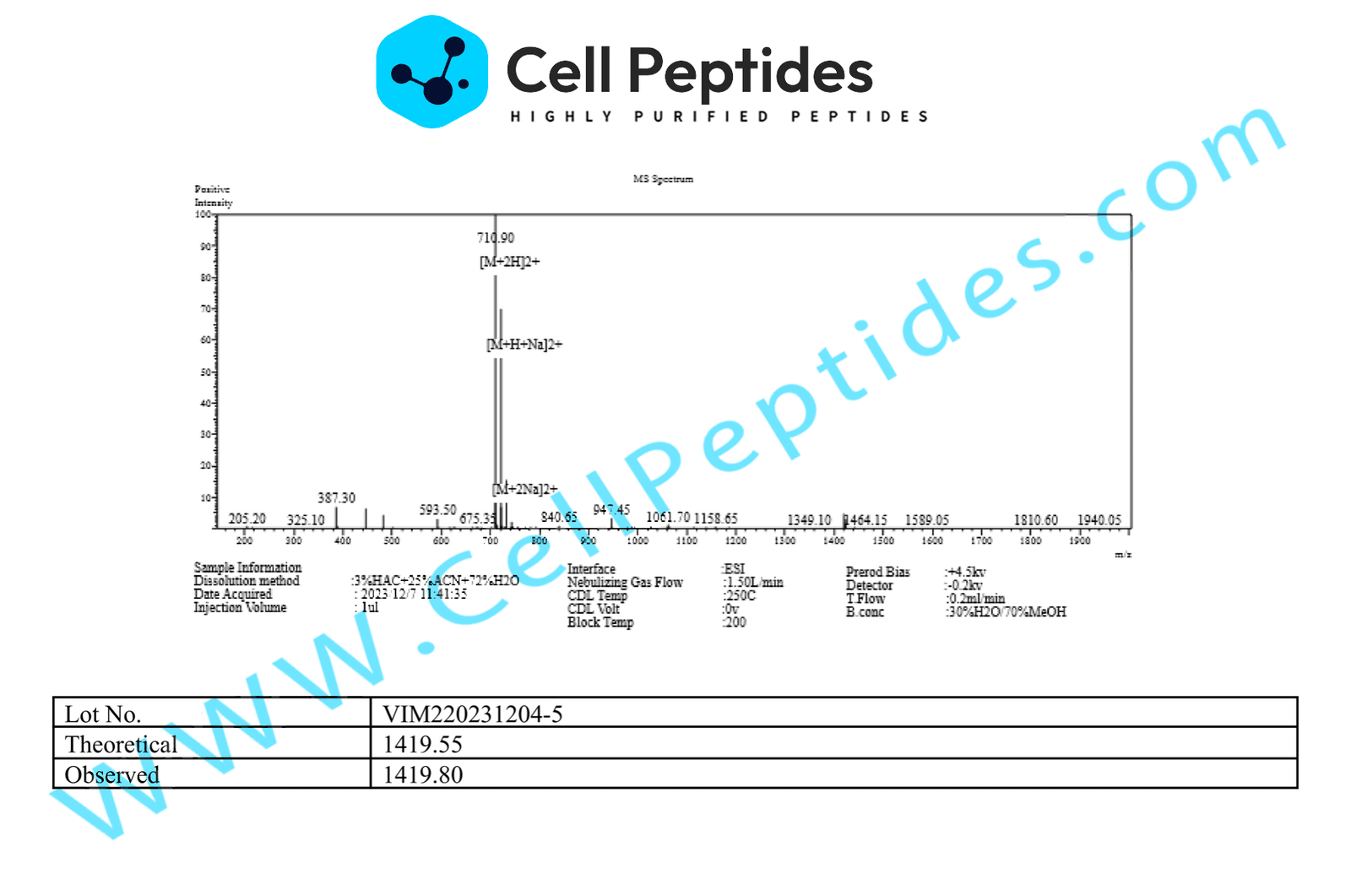
- Backed by independent testing — read the third-party lab reports that confirm purity, composition, and the precise peptide ratio for yourself.
- Shipped quickly and safely — temperature-controlled packaging protects your GLOW blend in transit, while insurance takes worries about damage off the table.
Your study into healing systems depends on all of these points. CellPeptides sets you up for replicable results. Have a question about the GLOW blend in your research design? Our team understands the science (we make your peptides). We’re here to support yours.
How Does the GLOW Blend of Peptides Work?
Separately, the three extensively studied peptides that make up the GLOW blend perform three separate actions. Together? They’re a combo for powerful insights into natural healing systems at peak performance.
Every component of the GLOW blend has a targeted, specialized function — and this powerful peptide “collab” is designed to get each to kick in at exactly the right time.
First, there’s TB-500. This healing peptide sends repair cells to damaged areas, manages actin for faster, more effective healing, and tells the excessive inflammatory response that slows healing to cool it.
BPC-157 comes in next. This is the rebuilding peptide. Its signal orders new blood vessel networks that flood wounded tissues with new microvascular networks. That means oxygen and nutrients. The building blocks for healing. TB-500 also directs fibroblasts — without which new tissues simply can’t be built.
GHK-Cu delivers the finishing touches. Skincare has taken a front seat in the research so far, but this copper peptide optimizes the entire remodeling process by recruiting stem cells to work on repairing wounded tissue and tripling elastin and collagen production.
Together, they’re the GLOW blend — a mix of the peptides that manage the natural repair process from start to finish. Targeted signals are great. This blend? It takes your research through the entire lifecycle. From inflammation control to final healing.
Potential Research Applications for the BPC-157, TB-500 & GHK-Cu Blend — and the Science It Builds On
It’s still early days for research into this triple-peptide combo — which makes your tissue healing studies all the more exciting. The foundation of future research is, however, solid. Decades of independent studies on BPC-157, TB-500, and GHK-Cu demonstrate the potential of each of the GLOW blend’s component parts.
Curious which fields of study are most likely to see the biggest future breakthroughs? All the scientific buzz is building up around three main areas.
Tissue Healing and Injury Recovery, in Sports Medicine and Beyond
The headline grabber — and the most immediately obvious research application, because it merges the potential of all three peptides. TB-500 manages inflammation and sends repair cells where they’re needed most. BPC-157 makes blood vessels network like crazy while sending healing fibroblasts to injured places. GHK-Cu makes sure that there’s enough collagen to rebuild tissues.
The GLOW blend? Of interest in the study of tendon tears and muscle strains after sports injuries [1], healing after surgery [2], and burn recovery [3]. Natural repair processes work. GLOW blend research studies what happens when they’re optimized.
The Dermatological and Anti-Aging Potential of the GLOW Blend
At the risk of stating the obvious, the same processes that heal tendons and muscles also come into play when it’s the largest organ, the skin, that’s injured — or damaged by age. The components that make up the GLOW blend are backed by years of intensive research. Into skin elasticity, scar reduction, healing festering wounds left by diabetes, and into reversing the UV damage that results from excessive sun exposure. [4, 5]
The foundation exists, and future research is sure to keep building on it. Perhaps most exciting? The idea that something everyone takes for granted — that age necessarily brings wrinkled, thinning, vulnerable skin — might be challenged by the GLOW blend.
The GLOW Blend of Peptides in the Management of Chronic and Degenerative Conditions
Chronic and degenerative conditions like osteoarthritis, lupus, degenerative joint disease, and diabetic ulcers are so hard to manage in part because they’re so inextricably linked to stalled healing. Every step forward soon becomes a step back when natural healing and defense mechanisms “get tired” and opt out — and a problem that was just getting better starts to worsen again.
The GLOW blend cashes in on the combination of three peptides that have each been well-studied independently in this context. TB-500 soothes excessive inflammation. BPC-157 restores blood flow. GHK-Cu rebuilds damaged tissue. [6, 7, 8] Although research is still confined to preclinical models, the promise is undeniable. The right research team could make truly exciting breakthroughs in this field.
Who Might Consider Researching the Potential of the GLOW Blend?
The most exciting peptide research doesn’t simply replicate existing findings. It makes new breakthroughs — sometimes in entirely different areas. The three peptides that make up the GLOW blend are among the most studied ones in regenerative science. The blend itself is a different story. Its study is most interesting to the pioneers out there. To researchers who actively hope to make discoveries.
The GLOW blend might just have a place in your lab if you’re that kind of pioneer — and if you’re studying:
- Combination therapies for faster and more complete healing — in complex tendon, muscle, and ligament injuries in bodybuilders and athletes, but also potentially reduced recovery times.
- Longevity — because the fact that the peptides critical for repair and regeneration decline with time hides the answer to some of the most important questions about the unwelcome side effects of aging. And ways to prevent them.
- Skincare beyond injury — millions of people invest in Botox every year, but what if the regenerative action, of which elastin and collagen production are an important part, can build youthful skin more naturally?
Excited to collect new data and make important discoveries? The GLOW blend gives you that potential, and there’s a lot of important research to be done.
Common Dosing Protocols for the GLOW Blend In-Vitro Research Setting
Every component peptide within the GLOW blend is exceptionally well-researched — something that bears repeating. Study designs have to account for the complexity of dosing three separate peptides, however. This process needs to account for the ratio of the GLOW blend. Researchers base the dosing protocol on the established literature (your study should start with a thorough review) based on research goals.
The dose depends on each research purpose. But starting dose would be around ~2.5mg of GHK-cu and 0.5mg of other two peptides.
In order to achieve that, you need to mix it with 2ml of BAC water and draw until the “1” mark on insulin syringe (1/10 of the whole vial).
CellPeptides provides the GLOW blend in lyophilized form, so it needs to be reconstituted to prepare it for multi-dose experiments. Bacteriostatic water is the sterile solvent required to do this. Wipe down both vials with alcohol to maintain sterile conditions. Then, slowly inject the determined quantity of BAC water into the 70 mg vial of GLOW blend. To keep the peptides stable, angle the syringe at the vial wall. Roll or swirl the mix until it is clear. Never shake — peptides get agitated easily.
Once the vial of GLOW blend has been reconstituted, it stays stable in cool and dark conditions — in the fridge — for approximately 30-60 days.
Have a question about multi-dose application or the best process of establishing the right dosing protocol for your model? CellPeptides is available for technical support questions.
If you want to calculate any other dosage – feel free to use our peptide calculator – it will give you a visual reference as well.
Scientific References
- https://journals.physiology.org/doi/full/10.1152/japplphysiol.00945.2010
- https://www.sciencedirect.com/science/article/pii/S0022202X15405950
- https://www.sciencedirect.com/science/article/abs/pii/S0304416514003158
- https://link.springer.com/article/10.1007/s10989-025-10751-w
- https://www.mdpi.com/2079-9284/2/3/236
- https://www.tandfonline.com/doi/abs/10.1163/156856208784909435
- https://bjo.bmj.com/content/92/7/992.short
- https://asipp.org/wp-content/uploads/Intra-Articular-Injection-of-BPC-157-for-Multiple-Types-of-Knee-Pain-2021-Alternative-Therapies-in-Health-and-Medicine.pdf


 Cart is empty