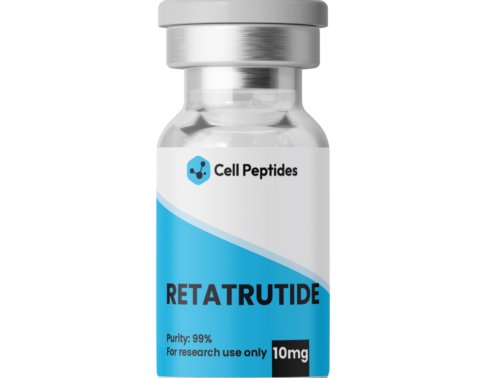
Why Choose CellPeptides’ Retatrutide?
It’s an exciting time for peptide research in the areas of obesity and metabolic health — and interest in Retatrutide is predictably exploding. With that has come a rise in suppliers that cut corners. The early motto of modern science, “Nullius in verba” (take no one’s word for it!) has been joined by another, equally important one. Caveat emptor.
Our Retatrutide is:
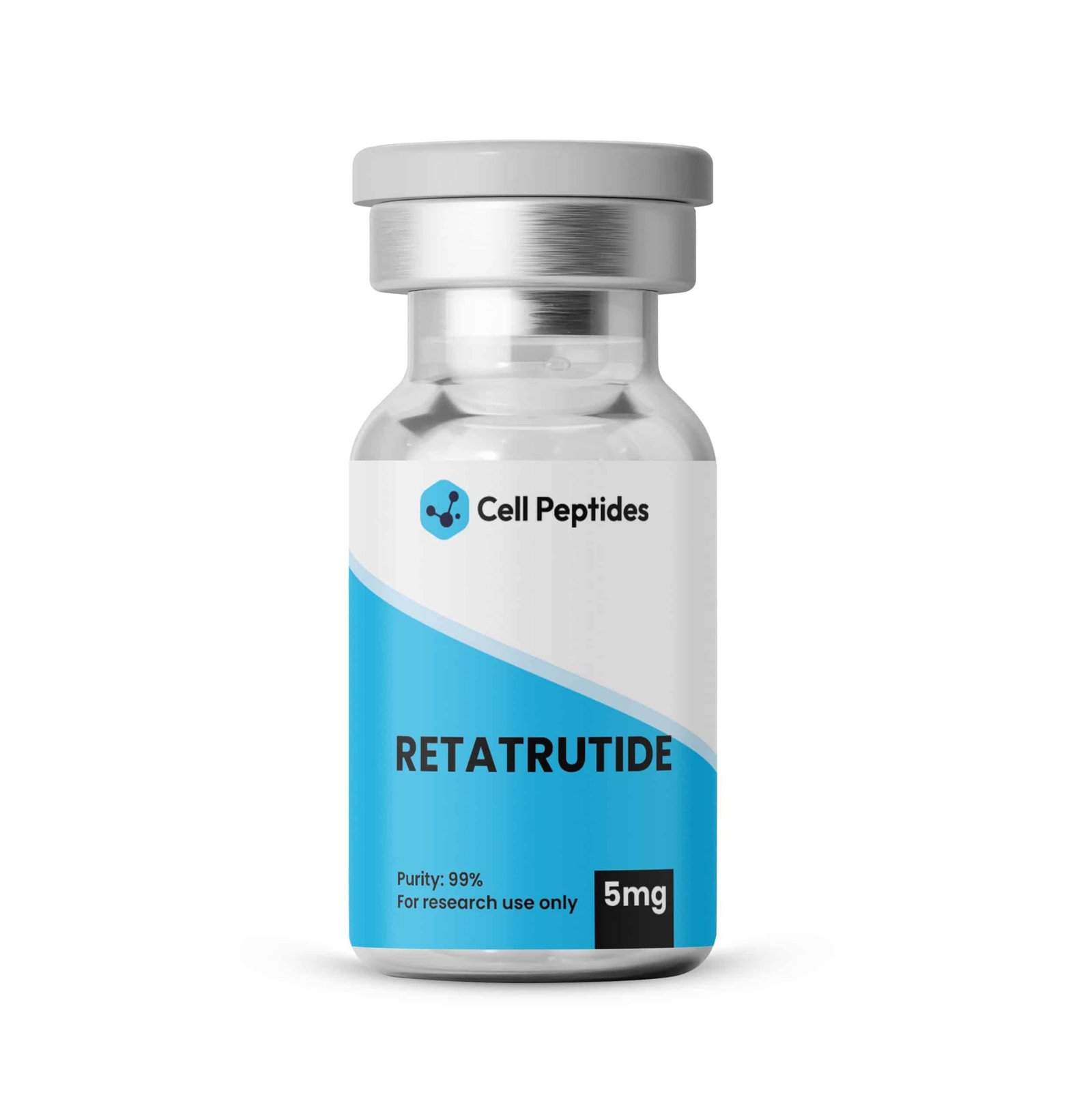
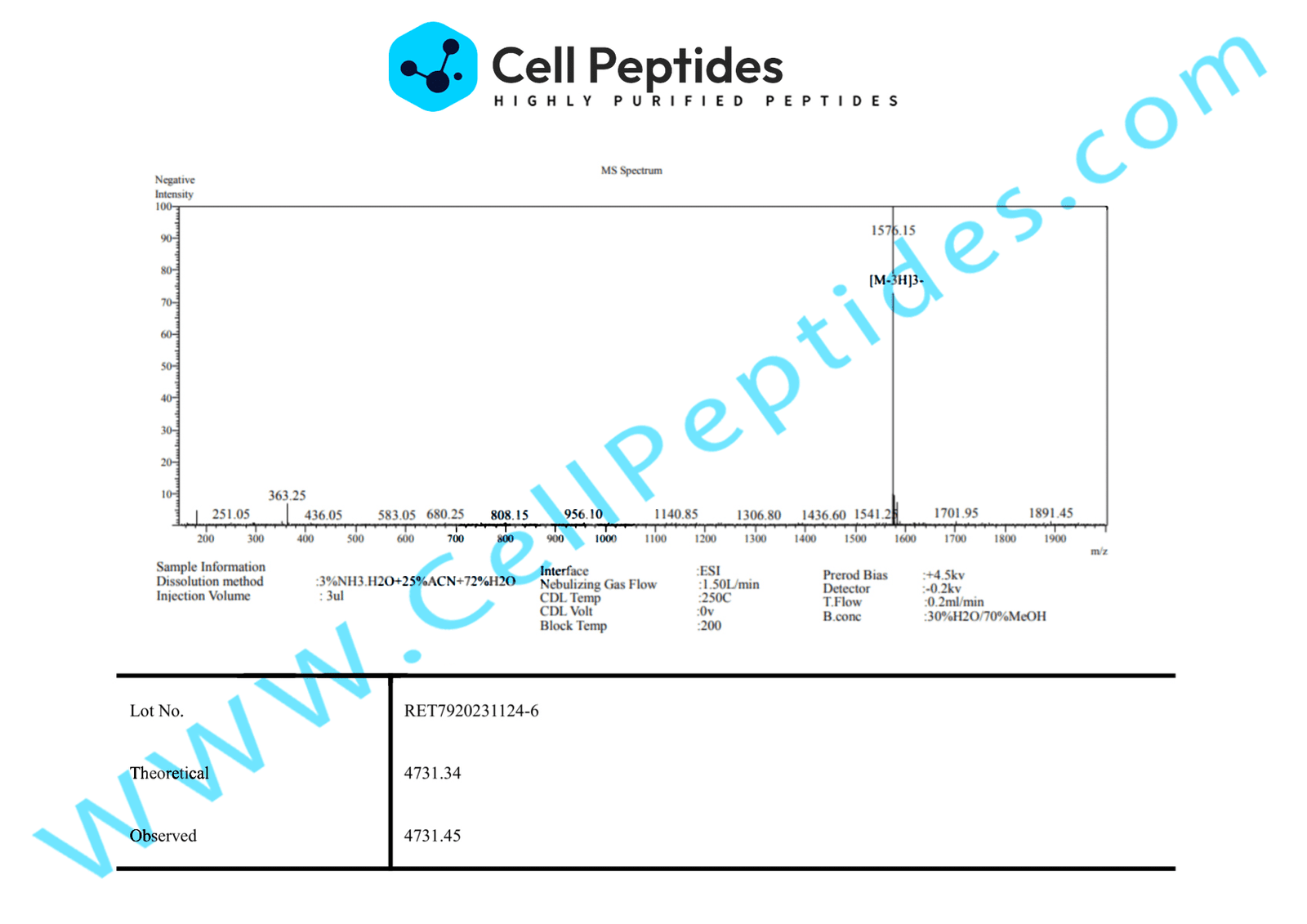
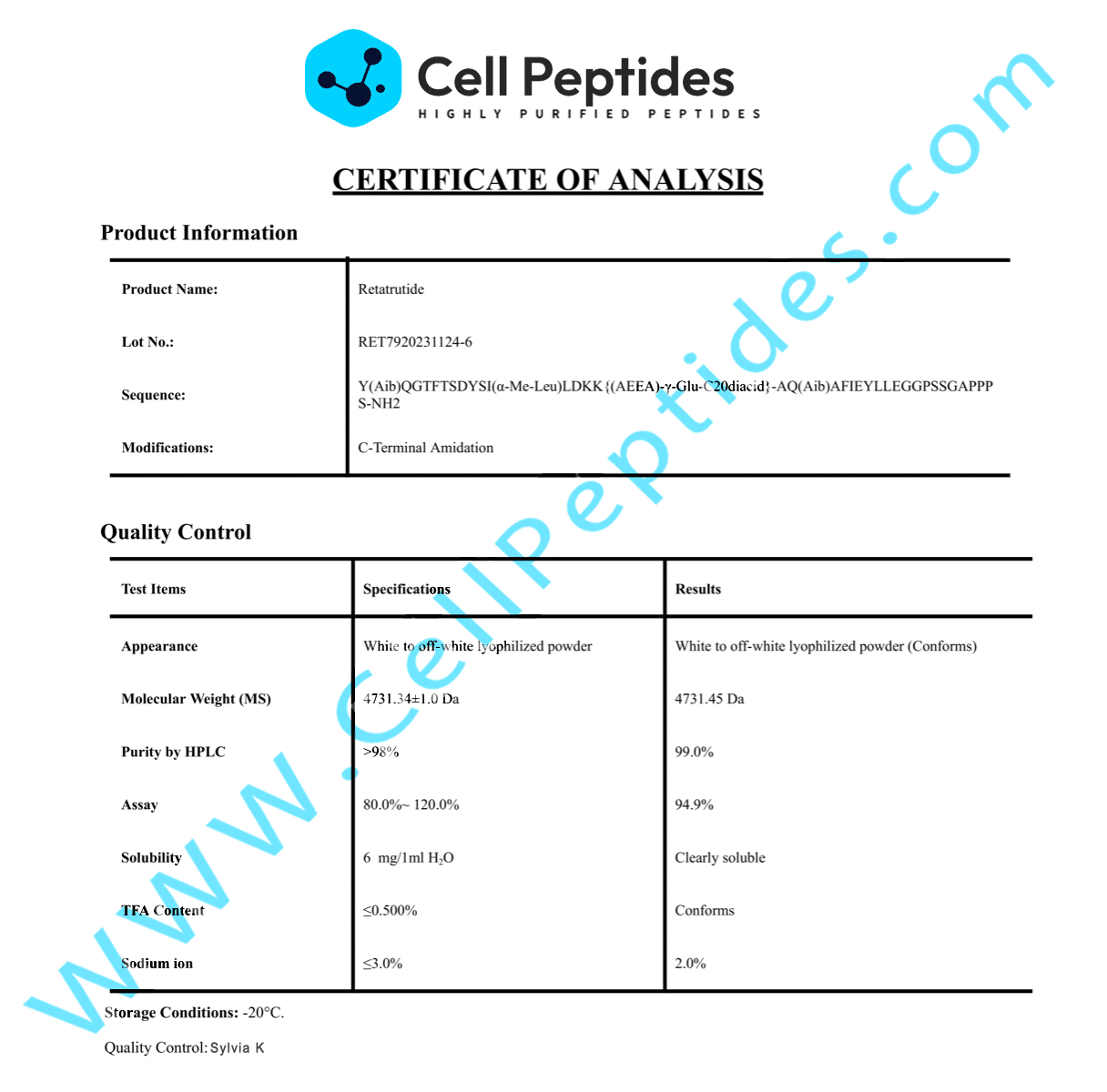
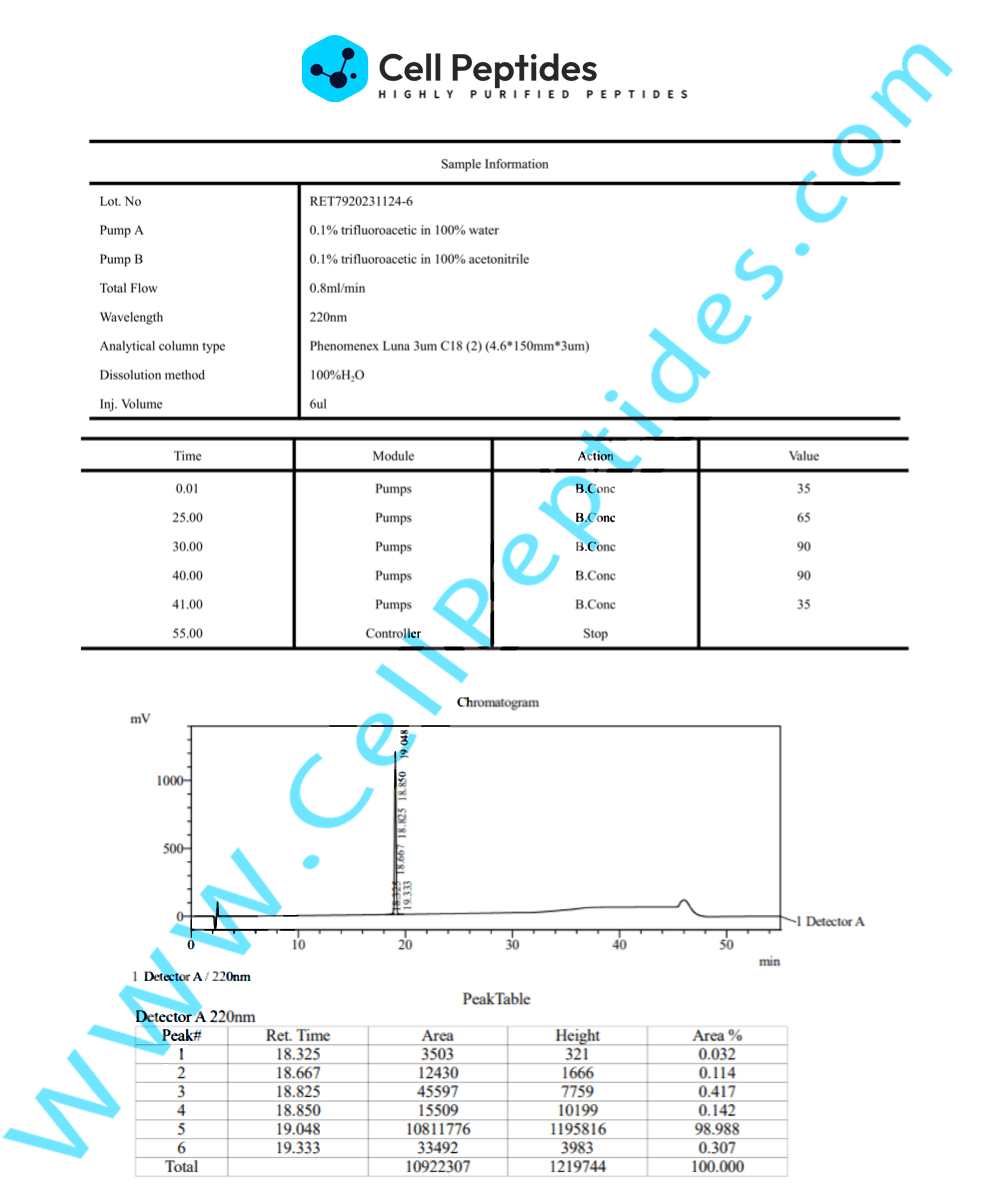
- Pharmaceutical-grade and ready for research — ≥99% purity.
- Backed by third-party lab reports because you want to be able to verify purity and composition yourself.
- Shipped via insured global shipping, quickly and with tracking — so you always know where your temperature-controlled package is.
Our customer support is on stand-by to answer all your order-related questions, but CellPeptides is a scientific and research company first and foremost. We know a lot about peptides, too, so run your study design by us if you need extra guidance.
How Does Retatrutide Work?
Retatrutide is a triple agonist — a peptide that binds to and activates three receptors, in the same way the body naturally would when functioning optimally.
The first of these three receptors is Glucagon-Like Peptide 1, which gets released after eating and does four main things. Similarly to Semaglutide, it keeps blood sugar levels in check and manages glucagon to stop blood sugar levels from spiking. GLP-1 also signals the body to feel full for longer, and slashes appetite, so cravings stop.
The second is GIP. Tirzepatide also works on this pathway. This part of the action boosts insulin, keeps appetite down, and (perhaps most exciting) might play a part in deciding how and whether the body stores fat.
Then there’s the glucagon receptor. Retatrutide acts on it for a metabolic boost (burn more calories at rest), shred fat, and stop out-of-control appetite at the source — within the liver and the brain.
That kind of triple front action is unique. It can attack metabolic dysfunction, the root of obesity and diabetes, much more effectively than any one strategy could ever achieve alone.
Retatrutide in Research: The Potential of a New Triple-Agonist Mechanism in Metabolic Disease and Obesity
The weight loss results seen in obesity studies have been… “impressive” doesn’t quite cut it. Losses of 24 percent of starting body weight were not outliers, but the average on the highest dose — which makes Retatrutide, on balance, even more effective than Semaglutide and Tirzepatide.
The reason behind the promise is its simultaneous targeting. Because Retatrutide zooms in on GLP-1, GIP, and glucagon receptors all at once, the research potential goes deeper than profound weight loss. Investigations into this peptide open the door to insights into liver function, glucose management, and cardiovascular protection as well. The most exciting investigations focus on both its sheer efficacy and the mechanisms behind the multi-pronged effects of Retatrutide.
Retatrutide in Blood Sugar Control and Diabetes Research
As part of a wave of next-gen type 2 diabetes treatments, it’s no surprise that human trials with Retatrutide have looked at its potential to slash HbA1c to prediabetic levels and suppress glucagon — with results that inspire optimism, plus a reduced risk of hypoglycemia (a common problem with older diabetes medications. These findings go hand in hand with body composition improvements (weight loss, healthier BMI, slimmer waist). [1]
Retatrutide for Obesity Management with Sustained, Profound Weight Loss
The biggest headline grabbers have come from a Phase 2 trial published in the New England Journal of Medicine. We’ve already hinted at it. Obese participants on the highest dose (12 mg) lost an average of 24.2 percent of the body weight they had going into the trial over two years. That often amounted to around 58 pounds — not possible, until recently, by means other than bariatric surgery.
What’s “substantial reductions in body weight” to researchers simply becomes “wow, my life back” to people who live with obesity. With Retatrutide, it becomes a step closer to being not a life sentence but another treatable chronic disease. Remission is possible.
The Impact on Lipid Metabolism and NAFLD
The same Phase 2 clinical trial made another exciting discovery. Research subjects with non-alcoholic fatty liver disease — which has had very few viable treatment options so far — enjoyed a really dramatic drop in liver fat. Most (86 percent!) were able to achieve liver fat levels in line with people who don’t have NAFL. [2]
Retatrutide Research Into Appetite Suppression
Appetite suppression and the control of cravings are, of course, one aspect that research can’t skip looking at when investigating weight loss and obesity. Retatrutide research has made interesting headway here, too, finding that the combined GLP-1/GIP agonism strongly impacts the satiety centers in the brainstem and hypothalamus. [3] In plain English, that means less unwarranted hunger. Fewer cravings. Healthier eating patterns naturally follow.
The Potential for Cardiovascular Risk Reduction
This one’s still a work in progress, and there’s plenty more exciting research to be conducted. So far, Retatrutide research has demonstrated that the peptide is moderately effective at reducing high blood pressure and highly effective at improving cholesterol levels. [4] Other preliminary research has found better cardiovascular outcomes (including a lowered risk of heart attack) and reduced stroke risk. [5]
Given that other similar peptides have been associated with reduced cardiovascular risk, that’s not surprising — but this is an area future research is likely to emphasize.
Who Might Consider Researching Retatrutide?
The simple answer? Retatrutide should be of interest to all researchers who would prefer to take part in groundbreaking science — rather than to only read about it in the Lancet and other prestigious medical journals.
The most obvious domains, for now, are:
- Metabolic disease research, with the focus squarely on obesity, weight loss, and type 2 diabetes for now — but with definite implications for PCOS and beyond, too.
- Interventions for non-alcoholic fatty liver disease for researchers excited about the potential for an effective treatment.
- Cardiovascular health in the context of obesity and type 2 diabetes — with investigations already pointing to better outcomes.
Then, there’s the area of comparative efficacy, especially with regard to Semaglutide and Tirzepatide. Metabolic research is making serious inroads set to shift obesity and weight loss management forever. Retatrutide is at the heart of much of it right now. Engaging in groundbreaking science? Source your research-grade Retatrutide from CellPeptides — and look forward to findings that might just change everything.
Common Dosing Protocols for Retatrutide In-Vitro Research Setting
Every study design is different. Researchers have to set the right dosing protocol for their investigations based on their goals. Based on clinical trial data, starting doses are usually between 1 mg and 4 mg, administered once a week via subQ. Escalate in stages, by adding 0.5-1 mg a week, until the final and maintenance dose is reached (12 mg in the New England Journal trial).
CellPeptides ships Retatrutide in a lyophilized form. To prepare it for study, reconstitute with ~2 mL of bacteriostatic water. From there, it’s possible to store the solution between 2 and 8°C for multi-dose experiments up to 30-60 days. (Discard if cloudy.)
If you don’t know how to calculate the correct dosage – a good resource is our peptide calculator here.
FAQs
Is Retatrutide more effective than Semaglutide?
In terms of absolute weight loss and blood sugar control? Yes. It’s a triple agonist, and the addition of GIP agonism (vs Semaglutide) might well be what gives Retatrutide a more potent effect.
How does Retatrutide differ from Tirzepatide?
Again, that has a lot to do with the additional hormonal pathway. Tirzepatide, also an incredibly effective weight loss peptide, is a dual agonist. Retatrutide adds a pathway.
Does Retatrutide have anti-inflammatory effects?
Early research points that way. In studies, the weight loss and blood sugar control seen with Retatrutide go hand in hand with observable inflammation-fighting effects. Although anti-inflammatory effects are a result of weight loss (via TNF-α and IL-6 reduction), studies are looking into potential direct inflammation-lowering abilities as well.
How quickly can the effects of Retatrutide be observed?
Better appetite control can set in within hours. Blood sugar effects are seen within a few weeks. Weight loss takes longer, but is usually seen after eight to 12 weeks — to the tune of ~five percent of total body weight.
Scientific References
- https://www.tandfonline.com/doi/abs/10.1080/08998280.2025.2456441
- https://www.nejm.org/doi/full/10.1056/NEJMoa2301972
- https://academic.oup.com/endo/article-abstract/165/11/bqae128/7762368
- https://www.researchsquare.com/article/rs-7103001/v1
- https://joe.bioscientifica.com/view/journals/joe/263/1/JOE-24-0046.xml#d53625e822


 Cart is empty