Why Choose CellPeptides’ Kisspeptin?
Kisspeptin isn’t like other peptides. It’s what starts the whole hormonal cascade — the hypothalamic-pituitary-gonadal axis itself. Its signal has to be precise. Flawless. CellPeptides is the EU-based research and scientific company you can always rely on for pharmaceutical-grade peptides that make exciting scientific discoveries possible.
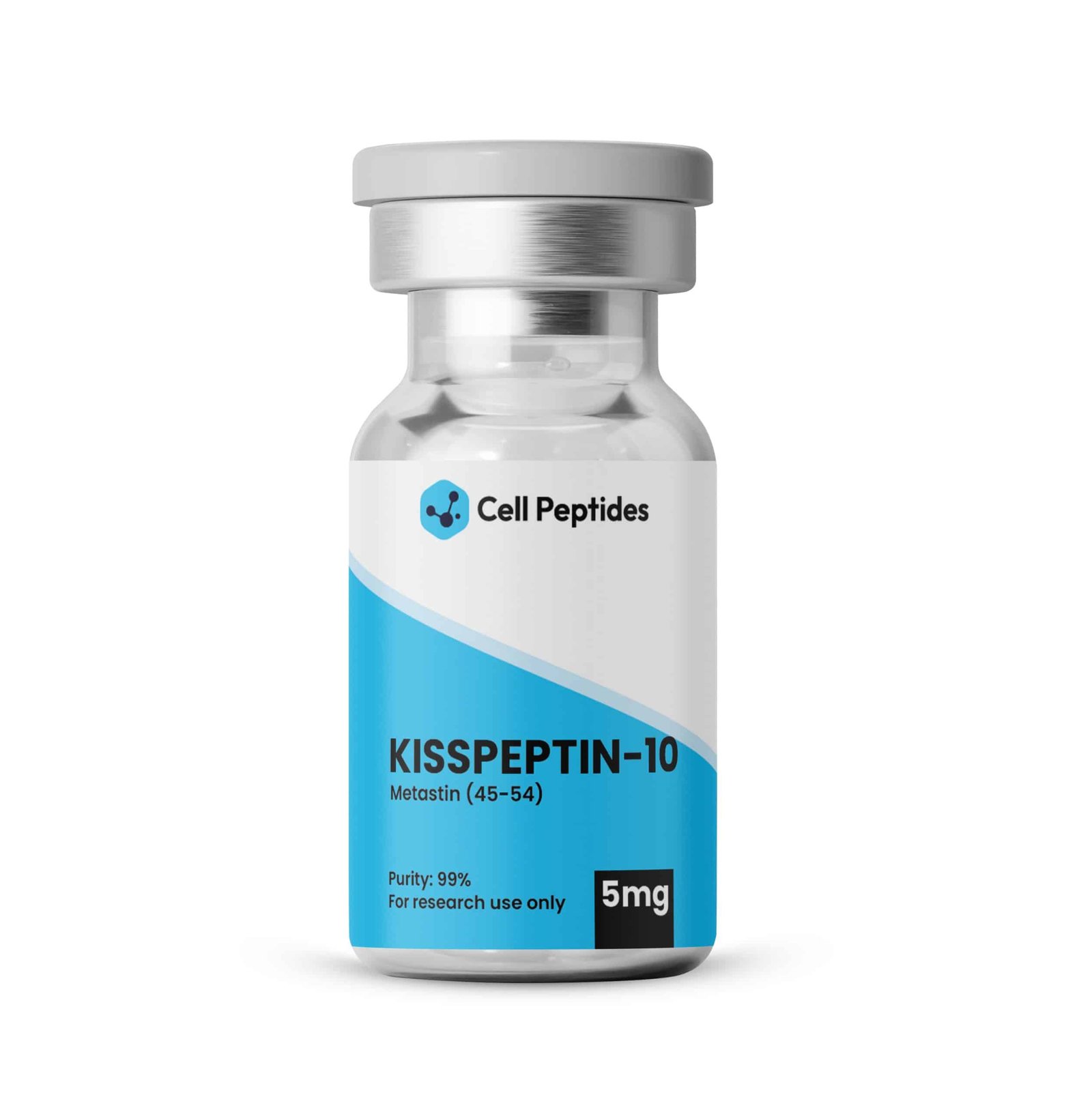
Our Kisspeptin-10 is:
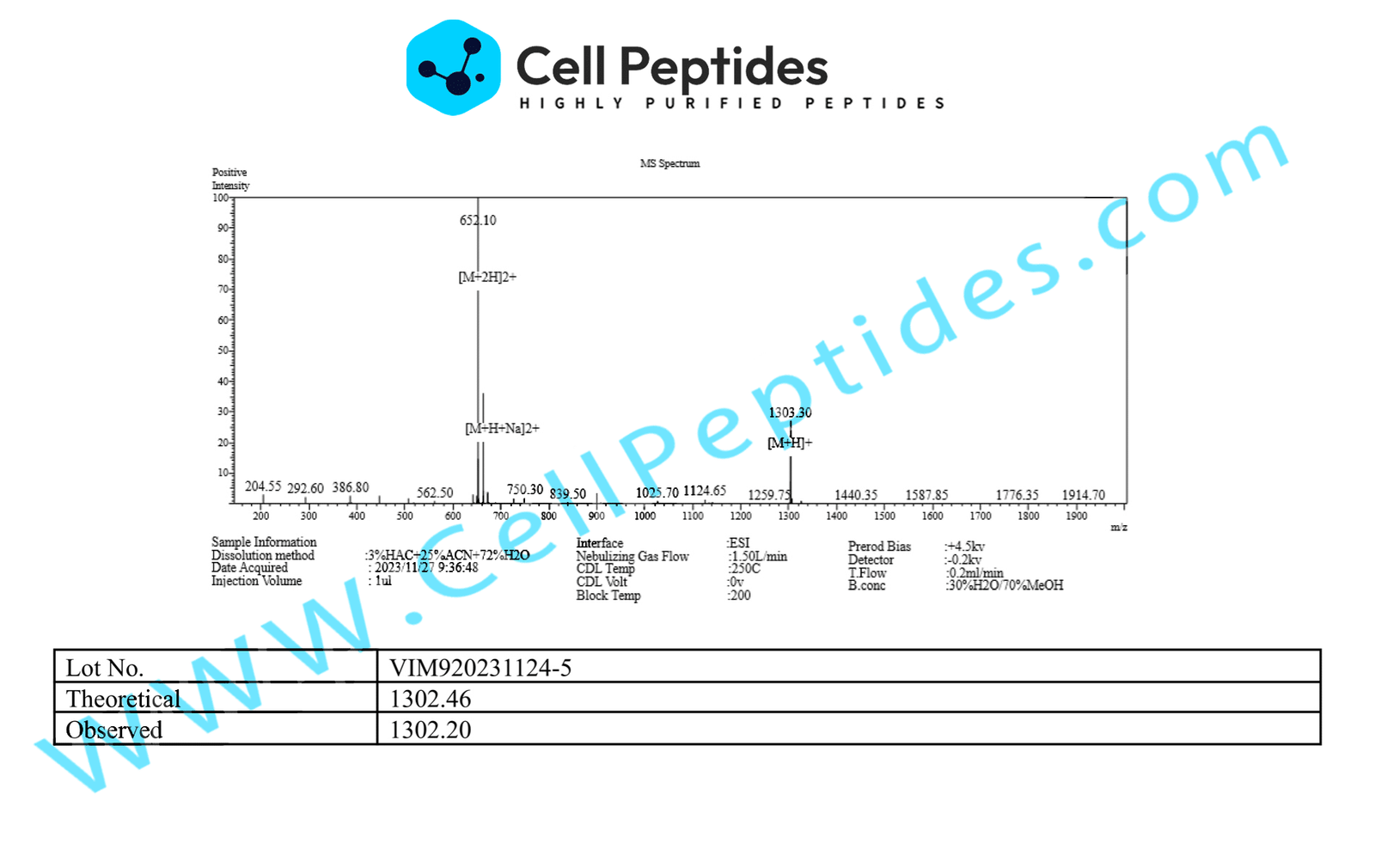
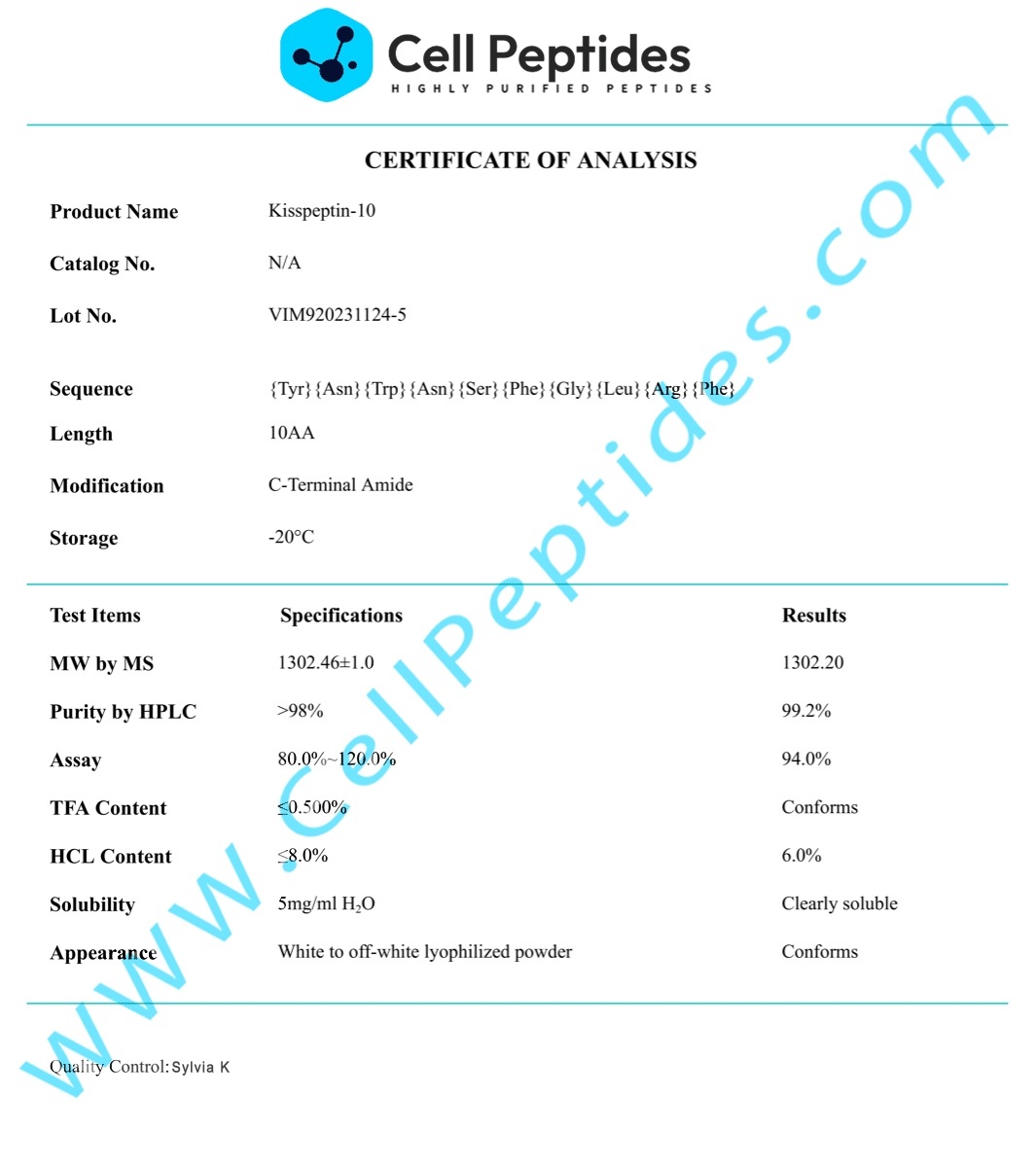
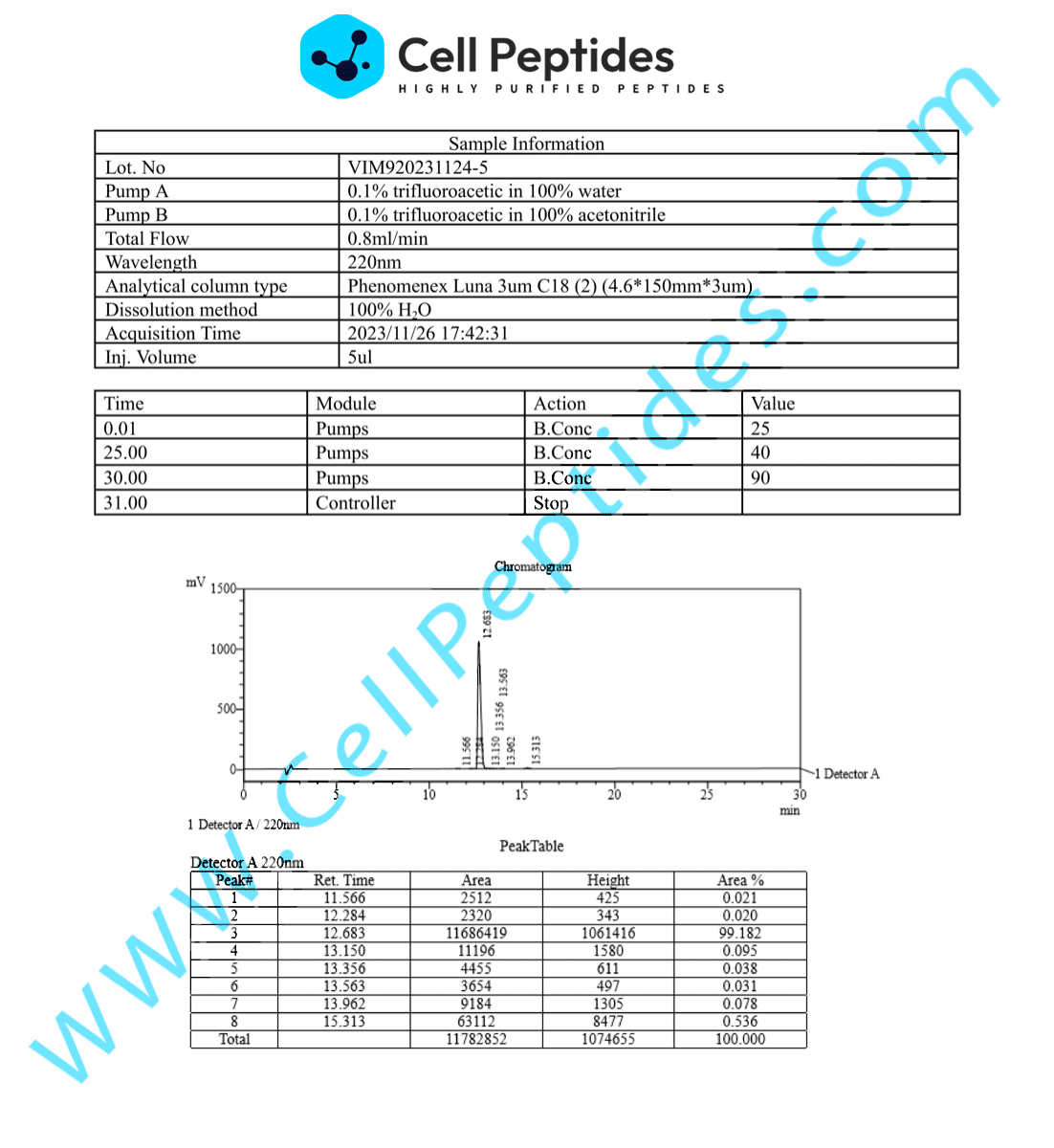
- ≥99% pure by HPLC — tested rigorously and free of truncated sequences, impurities, or residual solvents that could ruin your model.
- Backed by third-party, independent lab analysis, so researchers can check purity and composition.
- Shipped quickly and globally — with insurance and tracking, in discreet packaging.
We accept bank transfers, credit cards, and crypto. Because we don’t think payment methods or data privacy concerns should have to get in the way of your research. And if you need research support or have questions about ordering? Just ask our customer service team. We’re peptide nerds, just like you.
How Does Kisspetin-10 Work?
The synthetic version of Kisspeptin-10 is an exact copy of the natural form — and it works the same way.
The KISS1 gene makes a large precursor protein with as many as 145 amino acids. Enzymes turn it into a series of much smaller kisspeptins, including Kisspeptin-10. It’s not the only relevant kisspeptin, but it’s the smallest sequence that can bind to the GPR54 receptor. Once it does, GnRH pulses start firing. That process, in turn, gets the body to release LH and FSH, without which neither fertility nor a healthy sex drive is possible.
The scientific potential of synthetic Kisspeptin-10 is immediately apparent. It’s already used clinically to diagnose fertility challenges — but potential future applications are even more interesting. Let’s go there next.
Kisspeptin-10 in Research Settings: From Hormonal Restoration to Libido and Cancer Studies
Kisspeptin-10 has become one of the most fascinating neuroendocrine regulators in the body in research settings. It’s the smallest but most active fragment of the kisspeptin protein. As such, it’s pretty exclusive. It’s the switch that turns the GPR54 receptor on, the peptide without which Gonadotropin-Releasing Hormone stops.
That, of course, makes studying it worthwhile — far outside of its original discovery setting, cancer metastasis. What directions has this research taken since scientists first synthesized Kisspeptin-10 in the 1990s? See for yourself.
Kisspeptin-10 for Hormonal Restoration
It’s the main trigger for the HPG axis, so it’s no surprise that researchers have been curious to find out if Kisspeptin-10 could potentially serve as a more sophisticated answer to direct hormone replacement therapy. It can, in that Kisspeptin-10 boosts LH and FSH production, which can then kick the body’s natural testosterone or estrogen production up a few notches. [1, 2]
That makes Kisspeptin ripe for further research into hypogonadism — reduced sex hormone production — with a myriad of different underlying causes, from sports medicine to menopause and the age-related hormonal decline people run into so much frustration with.
Fertility and Reproductive Health Research
More than eight million children have already been born thanks to IVF, but it’s no secret that this assisted reproductive technology isn’t risk-free. The risk of Ovarian Hyperstimulation Syndrome, a dangerous side effect, in HCG cycles is well known. What if Kisspeptin-10 could be used for oocyte maturation instead, without the same risk? Research has already looked at this exciting possibility, with interesting results. [3] With further study, the future of IVF might become a lot safer.
Kisspeptin-10 Research Into Libido Improvement and Sexual Health
The HPG axis doesn’t only have a direct impact on mood and energy — more about that later — but also on sex drive. Animal studies are actively figuring out how exogenous Kisspeptin-10 influences the regions of the brain responsible for libido. [4] This effect is logical when you think about it. The restoration of healthy, normal, youthful sex hormone levels clearly has the potential to impact desire and motivation.
Improved Mood and Energetic Balance
A direct follow-on — because the same mood and energy boosts that get a beaten-down libido started up again also have a much wider impact on mental states. So far, early research has demonstrated that Kisspeptin-10 has anti-depressive, anxiety-fighting effects in animal models — and that it helps to restore energy levels. [5, 6]
Two birds, one stone? Almost. Researchers have been looking into the mood-improving potential of Kisspeptin-10 mostly in the context of psychosexual disorders. That is, disorders wherein depression and anxiety are inherently linked to low libido and in some cases infertility. Could there be wider mental health uses for Kisspeptin-10? Future studies are sure to investigate this possibility.
The Metabolic Health Uses of Kisspeptin-10
Surprised? Early researchers were, too. Kisspeptin receptors are, in fact, found in the pancreas among other places — and that made scientists wonder if it could play a role in blood sugar stabilization and insulin sensitivity improvements, too. [7]
Animal models say “yes.” Intravenous Kisspeptin-10 administration boosts glucose tolerance, circulating insulin levels, and other metabolic health markers. The relationship between sexual and metabolic health is deeper than once thought, this already suggests. [8] Future research is bound to make even more breakthroughs.
Kisspeptin-10 and Cancer Metastasis Suppression
The original use case, metastasis inhibition, hasn’t been left in the dust just because research has revealed viable applications in completely different fields. Kisspeptin slows down or stops the cell migration that makes metastasis possible, especially in cases of breast cancer and melanoma — and scientists don’t yet know why that’s true. [9] Research remains in its preclinical phase, but follow this area closely, even if you’re primarily interested in studying other applications.
Who Might Consider Researching Kisspeptin-10?
It’s quite literally at the top of the neuroendocrine cascade — so the fact that researchers across fields are drawn to the study of Kisspeptin-10 makes perfect sense. The applications with the biggest hope of medium-term clinical use? They include:
- Reproductive medicine — from advanced IVF protocols to increased fertility.
- The link between metabolic health and reproduction, with investigators looking to understand obesity mechanisms and insulin sensitivity.
- Sexual motivation and desire — and beyond that, mood and energy more broadly.
- Anti-aging research, because studying how the natural slowdown of the HPG axis with time gives insights into maintaining youthful hormonal levels.
- Hormonal balance restoration in groups where it has been disrupted.
- Oncology research into metastasis suppression.
Kisspeptin-10 might very well be a missing link in these areas. Your next discovery starts with research-grade Kisspeptin-10 from CellPeptides.
Common Dosing Protocols for Kisspeptin-10 In-Vitro Research Setting
Kisspeptin-10 research is exploding — but because the peptide has so many different applications in so many different fields of research, dosing protocols are also highly dependent on the goal of the study and the model. That’s true more than with many other peptides.
In animal models, doses of 150-300 mcg (subQ or IV) are not uncommon for research that studies natural GnRH pulses. Longer term studies that investigate metabolic effects more often rely on dosing from 300-500 mcg. Sex, weight, and species also matter.
Prepare Kisspeptin-10 for studies with multi-dose applications like this. Tap the vial to settle the dry peptide, inject bacteriostatic water slowly (2 mL for a 5 mg vial usually), pointing the stream at the vial wall. Then swirl the vial. Once the solution is clear, it’s safe to store between 2 and 8 °C, conditions that generally keep it stable for a maximum of 30-60 days.
Regarding the dosage calculation – we have a handy tool — peptide dosage calculator. Feel free to use it if you need it.
FAQs
How does Kisspeptin-45 differ from Kisspeptin 10?
Kisspeptin-45 is the full-length peptide. It has a significantly longer half-life — but it’s hard to synthesize and therefore much more expensive to use in research. Kisspeptin-10 is the shortest biologically active fragment. It has the same practical effects, but at a much lower cost.
What effect does Kisspeptin-10 have on male libido? Does it increase testosterone?
Studies are actively looking at the effect Kisspeptin-10 has on libido. It is, however, well-established that the peptide leads to a tangible testosterone boost in male test subjects. This boost is indirect, via GnRH release.
How quickly can the effects of Kisspeptin-10 be observed in studies?
Expect a hormonal response very quickly — within 45 minutes. Functional impacts on metabolism and physiological processes linked to sex hormones take longer, days to weeks.
Scientific References
- https://era.ed.ac.uk/handle/1842/9432
- https://academic.oup.com/endo/article-abstract/149/3/1004/2455004
- https://www.frontiersin.org/journals/endocrinology/articles/10.3389/fendo.2022.972137/full
- https://www.thieme-connect.com/products/ejournals/abstract/10.1055/s-0039-3400992
- https://www.nature.com/articles/s41574-020-00438-1
- https://www.thieme-connect.com/products/ejournals/abstract/10.1055/s-0039-3400992
- https://link.springer.com/article/10.1007/s00125-009-1283-1
- https://www.thieme-connect.com/products/ejournals/abstract/10.1055/s-0039-3400242
- https://www.spandidos-publications.com/10.3892/mmr.2017.7578?text=fulltext


 Cart is empty