Why Choose CellPeptides’ DSIP?
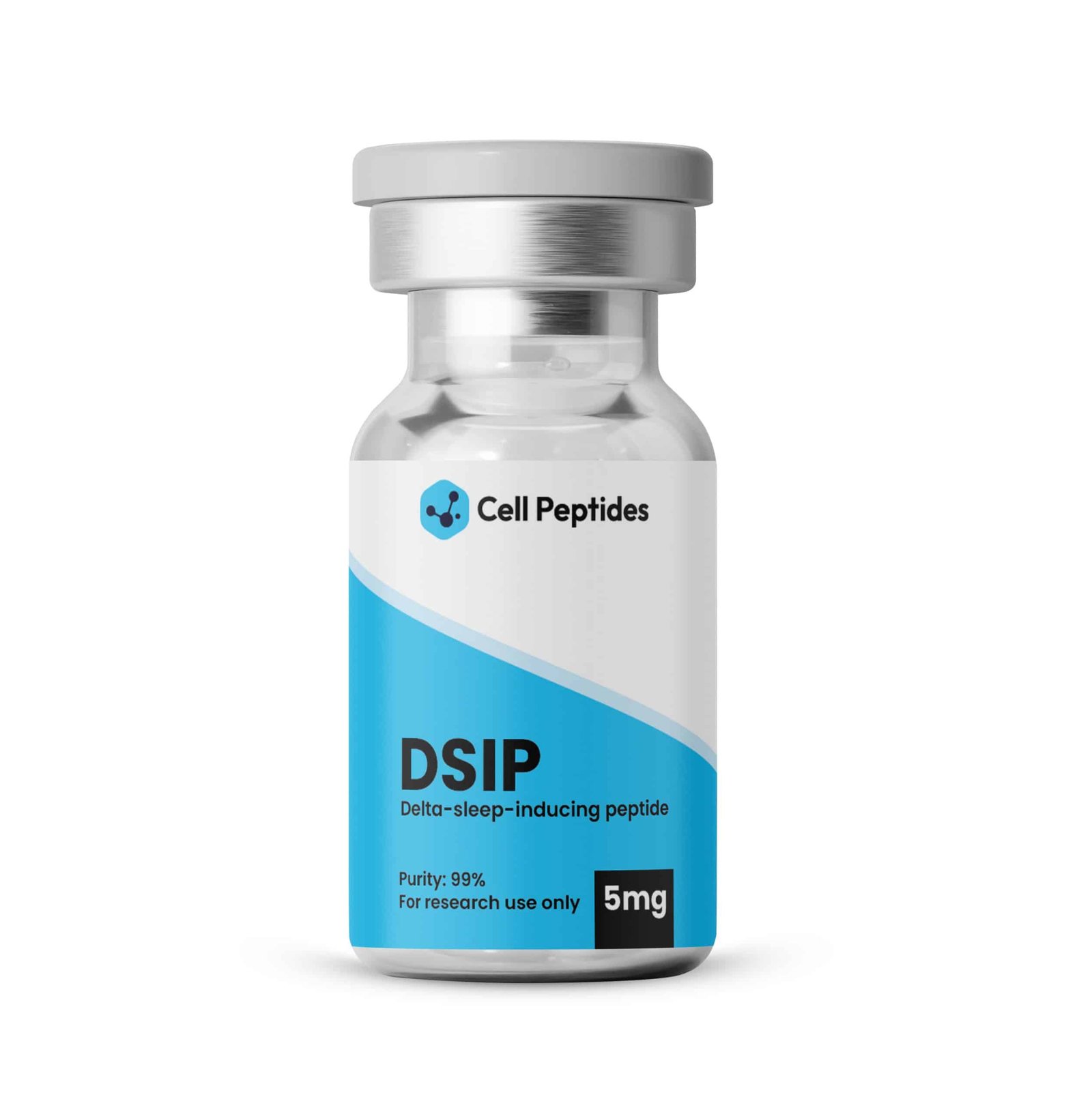
DSIP replicates a specific natural signal — so its value is zero unless it’s a perfect copy. Want to make sure your research starts on solid ground? That takes thorough study design, but also a supplier you can count on to provide the exact structure required. That’s CellPeptides. Our Swiss-based lab:
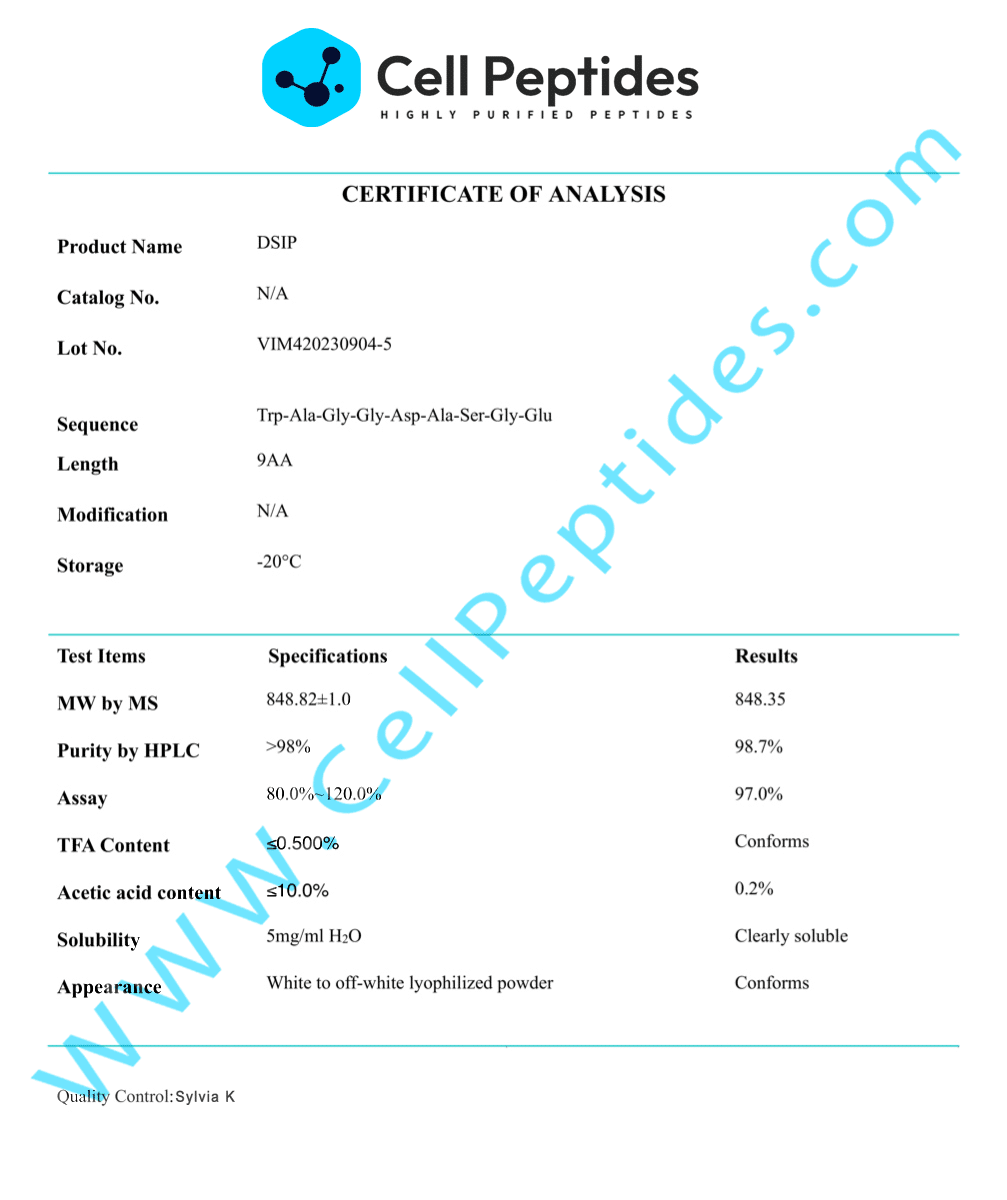
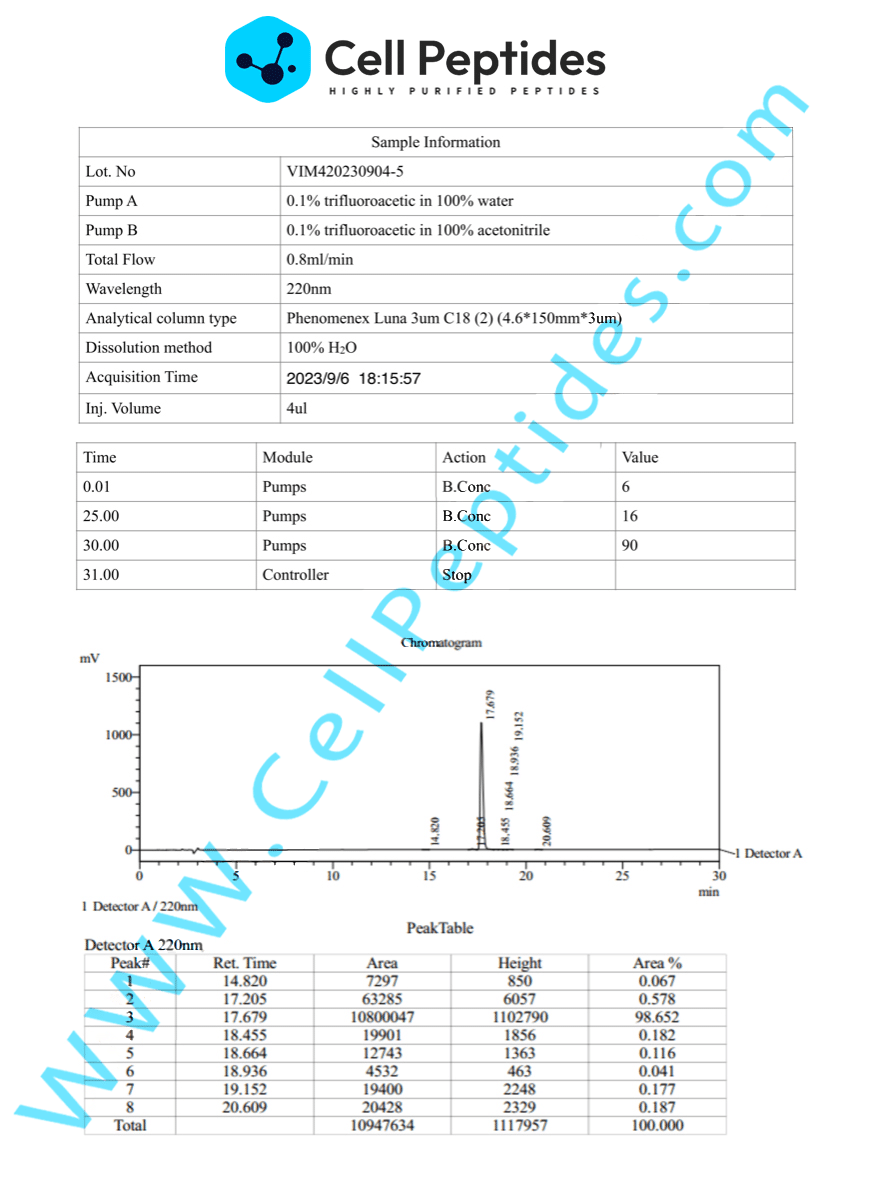
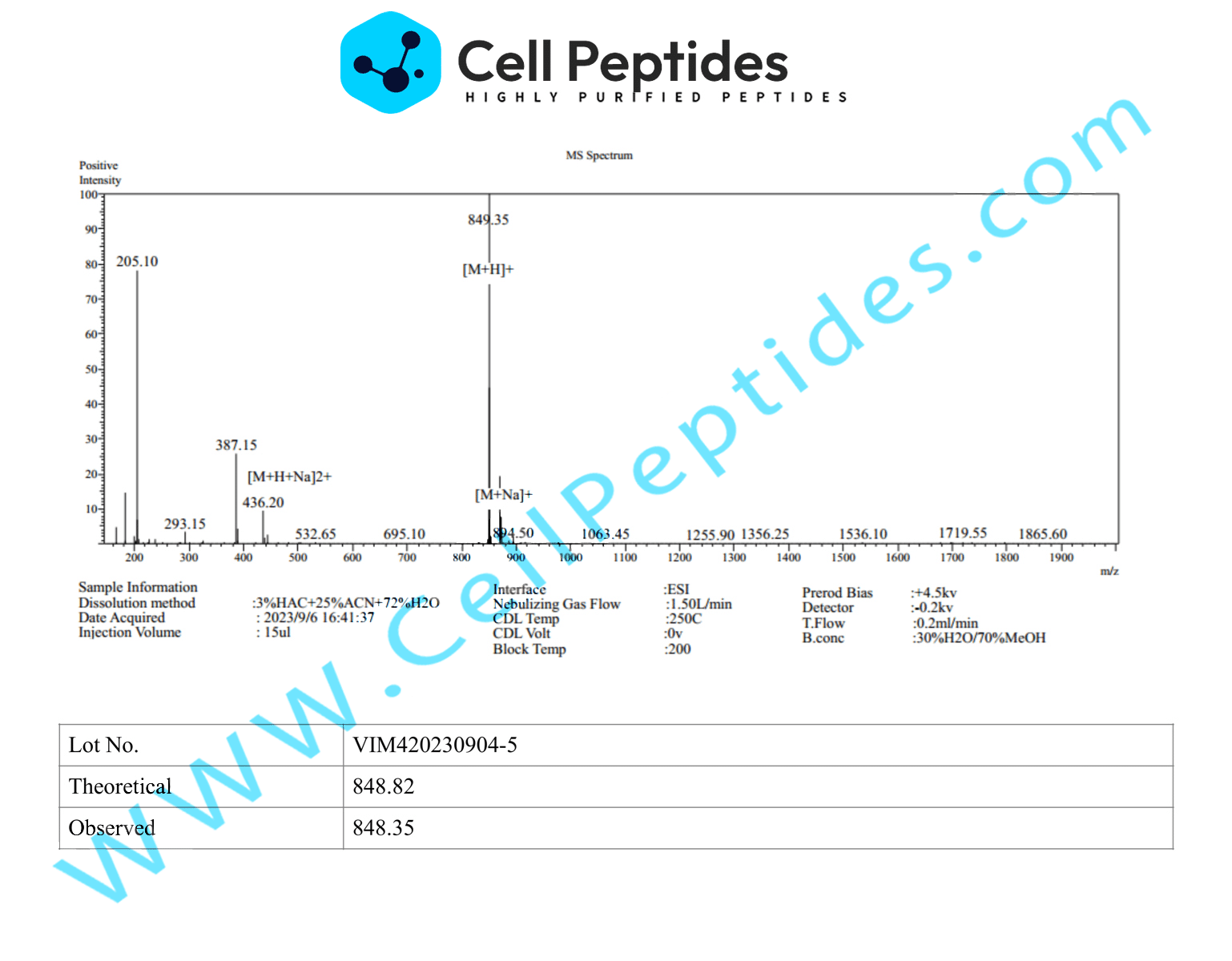
- Synthesizes DSIP to ≥99% purity — pharma-grade and ready for serious study.
- Subjects the DSIP we make to independent testing, with lab reports you can review to verify purity and composition. Good science never cuts corners.
- Ships your DSIP quickly, safely, and globally — with insurance and tracking.
- Is flexible — we take cryptocurrency as well as credit cards and bank transfers.
Have questions? Our customer support team will get them answered, whether they’re about your order or your study design.
How Does DSIP Work?
The synthetic form is structurally identical to natural DSIP found in the pituitary, the hypothalamus, and other regions of the central nervous system. (That’s just as true for the rabbits DSIP was originally “harvested” from as it is for people and other mammals.)
The most exciting part? Scientists don’t quite understand how DSIP works yet, which means future research has a lot to uncover. Plenty of theories exist, though, and some are well-supported.
DSIP appears to act as a homeostatic regulator — it restores balance to disrupted systems. Research so far shows that it impacts the Hypothalamic-Pituitary-Adrenal axis and lowers the production of stress hormones like cortisol and ACTH, perhaps precisely why it plays a part in restoring normal sleep.
This multi-action peptide also, on the other hand, influences the functioning of GABA, the serotonin system, and the opioid receptors. That bit likely explains its observed effects with regard to stress zapping, observed pain relief effects, and supporting addiction recovery, but it could also be why DSIP improves sleep quality.
The precise mechanism of action might still be unknown, but research into the effects DSIP has is both extensive and surprisingly broad. Future research will almost certainly bifurcate — as some teams study why DSIP does what it does, others are bound to keep studying potential practical uses.
DSIP Research: Observed Effects and Potential Applications in Sleep Regulation and Beyond
Some peptides are narrow, single-purpose signals — but not DSIP. This homeostatic regulator works to restore balance through several pathways, as we’ve already seen. Not by brute force, but through natural harmonization. It’s no surprise that this subtle but broad action has led to studies in several exciting areas. The most promising fields of study? Review them here, and expect to be quite amazed.
How DSIP Normalizes Disordered Sleep
Regulating sleep is the “bread and butter” part of DSIP research — because that’s its most studied and most well-documented effect. The consistent finding across research? DSIP induces the slow-wave sleep mammals depend on to feel rested and restored, but also to build memories effectively. [1, 2] In contrast to the sedatives so often prescribed to fight insomnia, DSIP has this effect without causing grogginess. That’s important, because swapping insomnia for daytime brain fog isn’t exactly an appealing proposition.
Applications in research go further than classic insomnia. Studies also target jet lag and night shift workers.
It Protects the Nervous System From Oxidative Stress
Oxidative stress is a major player in both neurodegenerative diseases and aging. Studies conducted to date have demonstrated DSIP has potential in this area, namely by protecting neurons from that type of damage by boosting antioxidant production in the brain. That is, by strengthening the brain’s own protective systems. Research into the possibility that this might help people with Alzheimer’s, Parkinson’s, and stroke has already taken place — and there’s more to come in the future. [3]
Future Chronic Pain Applications for DSIP
Just as exciting — especially when you consider that most people with chronic pain report inadequate relief with their current management protocols — is DSIP’s role as an anti-nociceptive. That’s to say, it takes the edge off the subjective experience of pain. How? [4] That’s not clear yet, but likely because DSIP acts on the natural opioid receptors. The two-front action that results (slashing pain sensitivity and normalizing sleep) makes DSIP an obvious candidate for fibromyalgia and chronic fatigue syndrome research. [5] Most promising might be the thought of DSIP as a chronic pain management that doesn’t come with the same habit-forming effects as opioid painkillers.
DSIP and Addiction Recovery
Speaking of which, DSIP is also a candidate for research into addiction recovery — with special attention paid to its potential as a treatment for withdrawal symptoms in alcoholism and opioid addictions. Even very early research into this peptide, done in the 1980s, had already identified this effect. DSIP regulates brain balance. It improves sleep. Both are disrupted during withdrawal phases. Could that connection improve recovery outcomes? Studies done to date hint that the answer is “yes,” [6], but much more work remains to be done in this field. It may well be where the next DSIP breakthroughs happen.
DSIP for Stress, Anxiety, PTSD, and Mood Regulation Effects
Research models — mostly limited to animals so far — have led to proof-of-concept results already. DSIP has anxiety-reducing effects by way of its influence on the HPA axis. Excess cortisol and ACTH (two of the main stress hormones) are seen in conditions ranging from post-traumatic stress disorder to social anxiety and chronic stress. DSIP, research shows, brings them back into balance. [7, 8] Supplementation might, in the future, become a powerful way to help patients with these disorders.
Who Might Consider Researching DSIP?
Insomnia and sleep regulation have long been the main focal points for DSIP research. That hasn’t changed. DSIP is a compound of interest to investigators trying to tease out how slow-wave delta sleep affects daytime performance, mood, and energy — and to those studying jet lag recovery or sleep disruptions caused by night shifts.
Newer studies have also started to pay more attention to the other potential benefits of DSIP, though. Even if you’re not a sleep researcher, DSIP might deserve a place in your lab if you’re studying:
- Stress — and stress disorders like anxiety and PTSD.
- Protection against oxidative stress in the brain, and the effects on health with age or neurodegenerative conditions.
- Chronic pain management.
- Addiction recovery, with attention to the immediate withdrawal phase of life after substance abuse.
The current body of research demonstrates DSIP to have potential in all these fields. The interesting thing? The precise mechanism of action still isn’t clear, and studies that try to figure out exactly how DSIP works are just as important.
Common Dosing Protocols for DSIP In-Vitro Research Setting
Peptide research starts with designing your study, and that includes dosing calculations. Thankfully, you have a massive body of literature to learn from. Decades of published studies have led to a well-established dosing protocol for DSIP, but the optimal dose still heavily depends on a myriad of considerations — your precise model, your research goals, and the precise effect you hope to observe. However, a commonly reported dosing range is 100 to 300 mcg.
Daily dosing, subcutaneous, is frequent. Timing is another important aspect of any study design. DSIP affects sleep, so it is usually given before the sleep cycle (which depends on the model).
DSIP is prepared for research through reconstitution. For example, add 1 mL of bacteriostatic water to a 5 mg vial of lyophilized DSIP for multi-dose research. Inject the BAC water slowly after wiping both vials with alcohol wipes, and angle the syringe at the vial wall — and then roll or swirl, because violent agitation can compromise the peptide solution.
Bacteriostatic water is a sterile solvent that maintains stability for around 28 days if the solution is kept at temperatures between 2 and 8 °C. Keep an eye on the solution, and discard it if it becomes cloudy.
In order to calculate exact dosages for your research based on how much BAC water you added – use our peptide calculator here.
Scientific References
- https://www.pnas.org/doi/abs/10.1073/pnas.85.10.3653
- https://onlinelibrary.wiley.com/doi/full/10.1111/j.1471-4159.2006.03693.x
- https://link.springer.com/article/10.1023/A:1010255230338
- https://www.sciencedirect.com/science/article/abs/pii/0014299988905109
- https://www.researchgate.net/profile/Fabio-Garcia-Garcia-2/publication/329276514_Sleep_factors/links/6185afc1d7d1af224bb9a125/Sleep-factors.pdf
- https://karger.com/ene/article-abstract/23/5/364/119324/DSIP-in-the-Treatment-of-Withdrawal-Syndromes-from
- https://www.frontiersin.org/journals/pharmacology/articles/10.3389/fphar.2024.1439536/full
- https://karger.com/nps/article-abstract/9/4/197/234104/Effects-of-DSIP-in-ManMultifunctional


 Cart is empty