Why Choose CellPeptides’ BPC-157 & TB-500 Blend?
Because all serious peptide research starts with a lab committed to providing pure, reliable peptides. Healing peptides have gone mainstream, and there’s no shortage of questionable suppliers eager to satisfy demand. CellPeptides is an EU-based research company that gets it right.
Don’t believe in cutting corners? Neither does our WHO/GMP and ISO 9001:2015 certified lab. When you order our BPC-157 & TB-500 Blend, you know you’re getting:
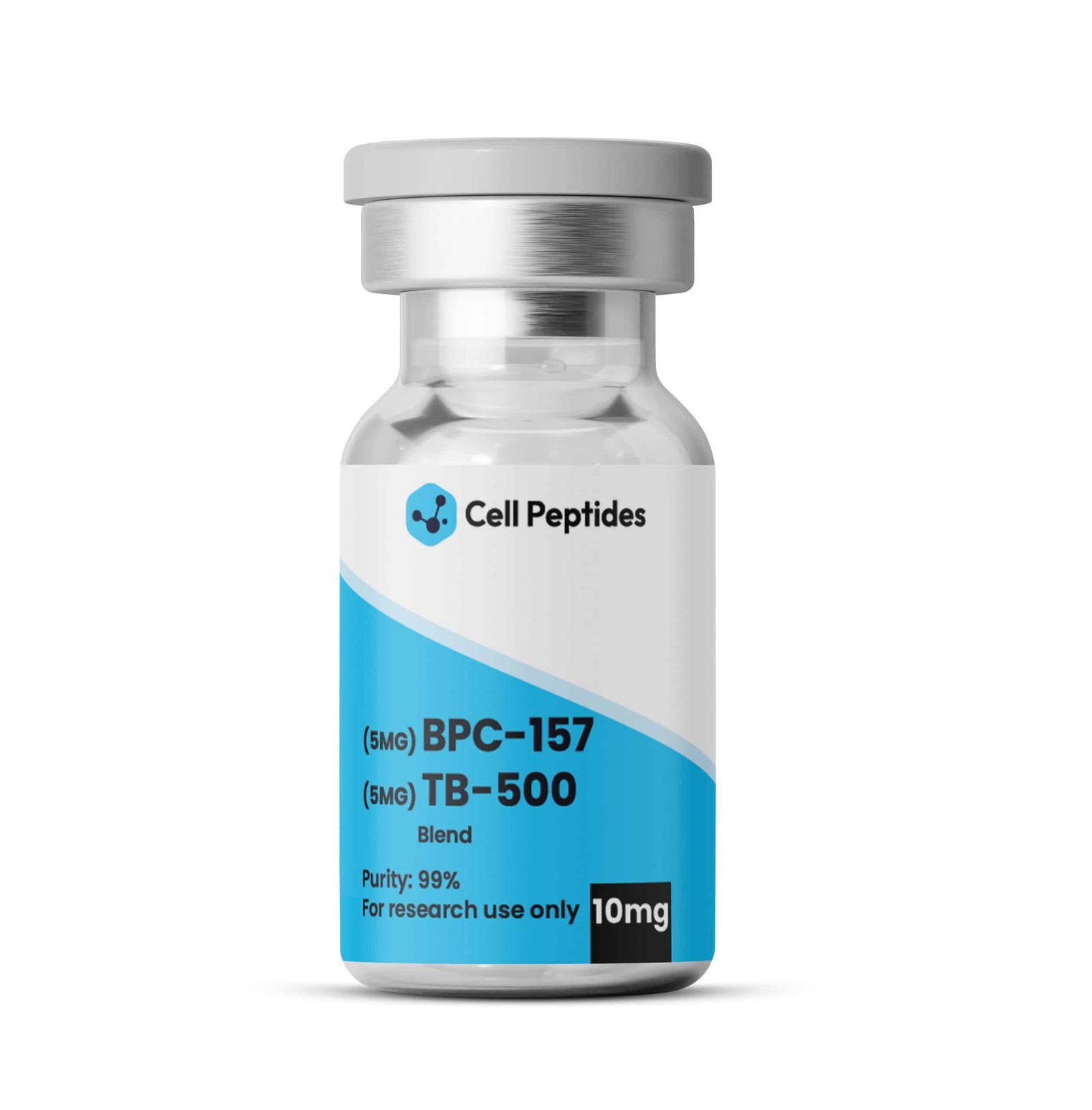
- A perfectly balanced ratio — formulated so your experimental conditions stay consistent.
- Pharma-grade for both components. BPC-157 and TB-500 are made to ≥99% purity before being precisely combined.
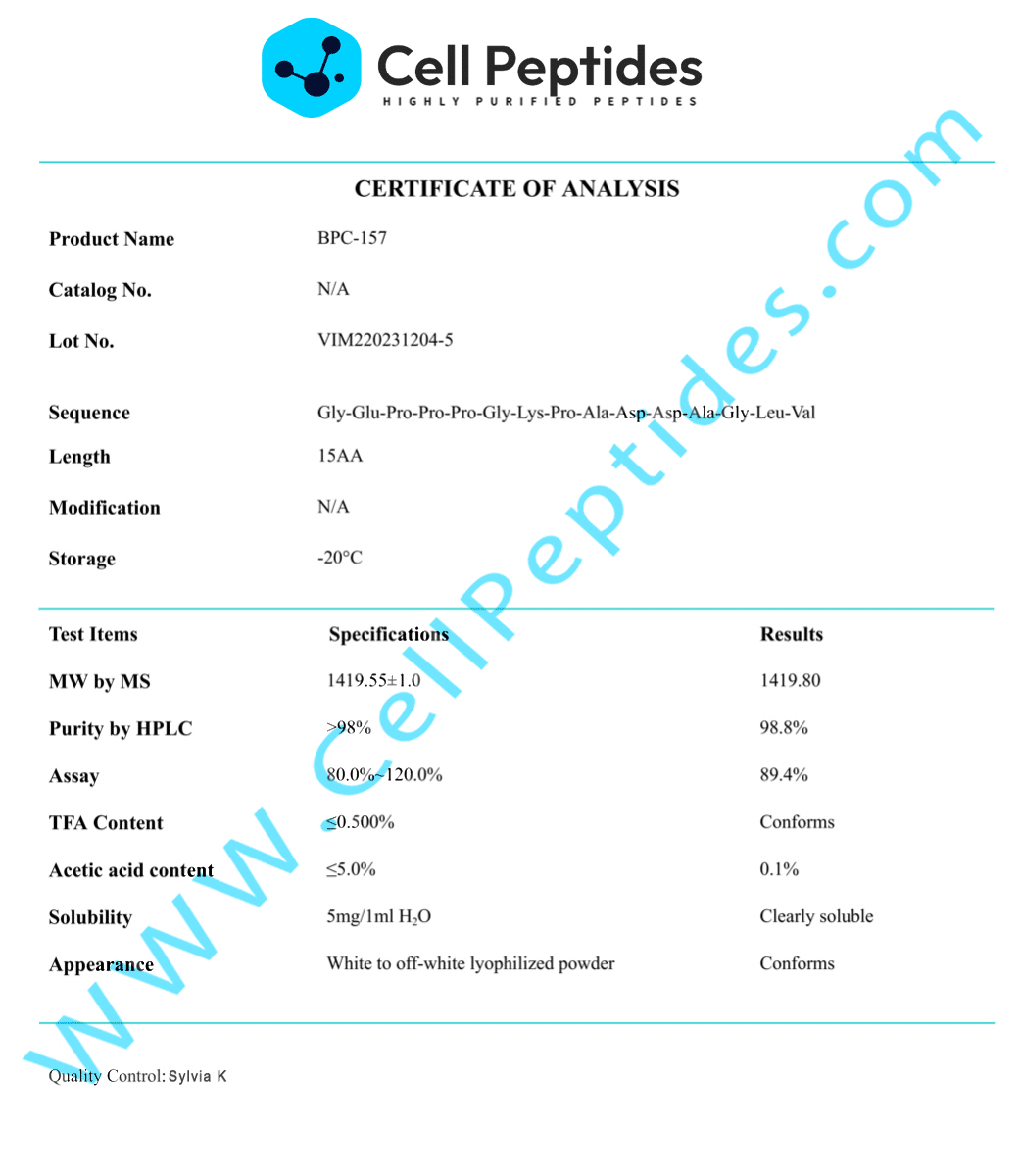
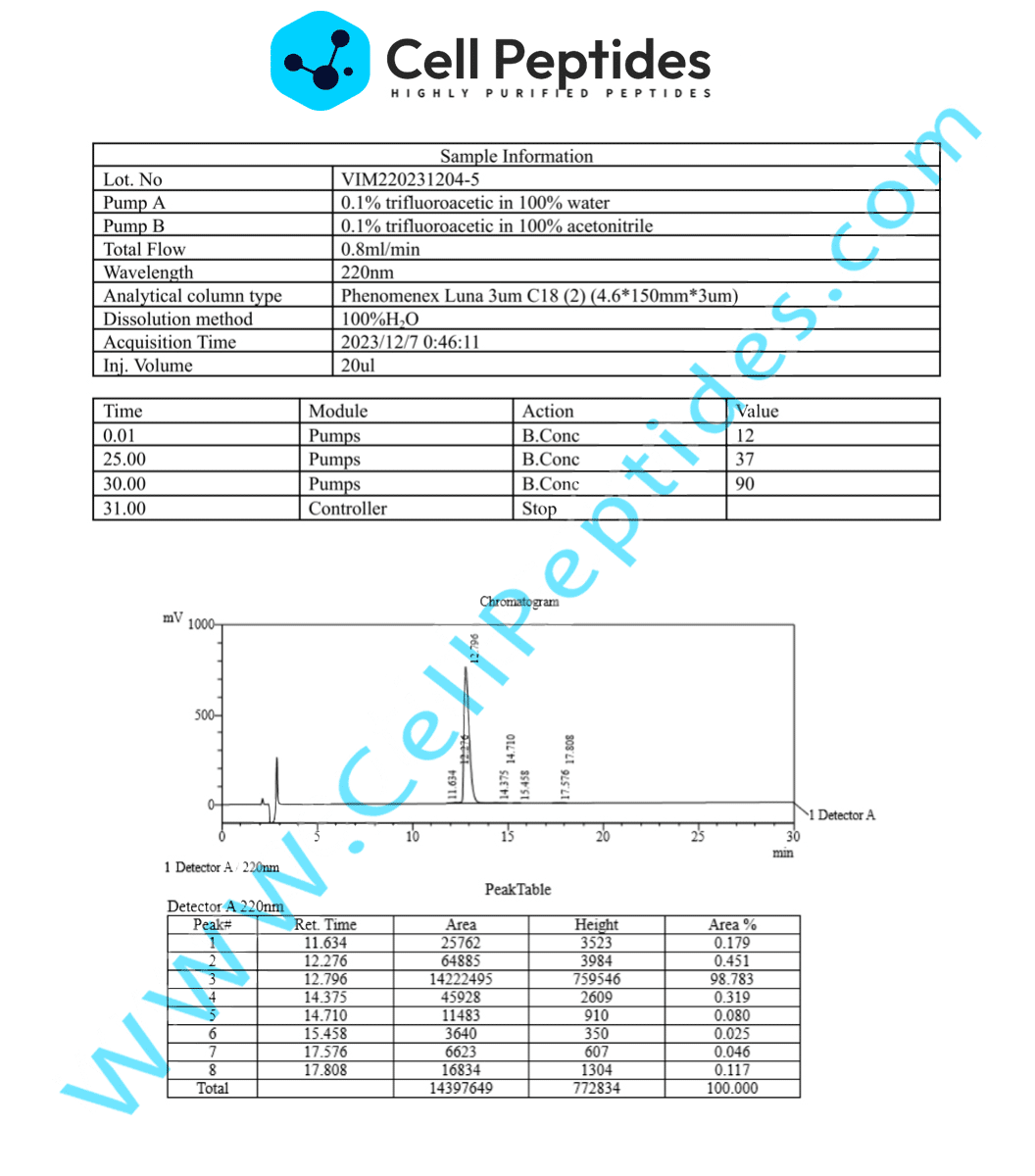
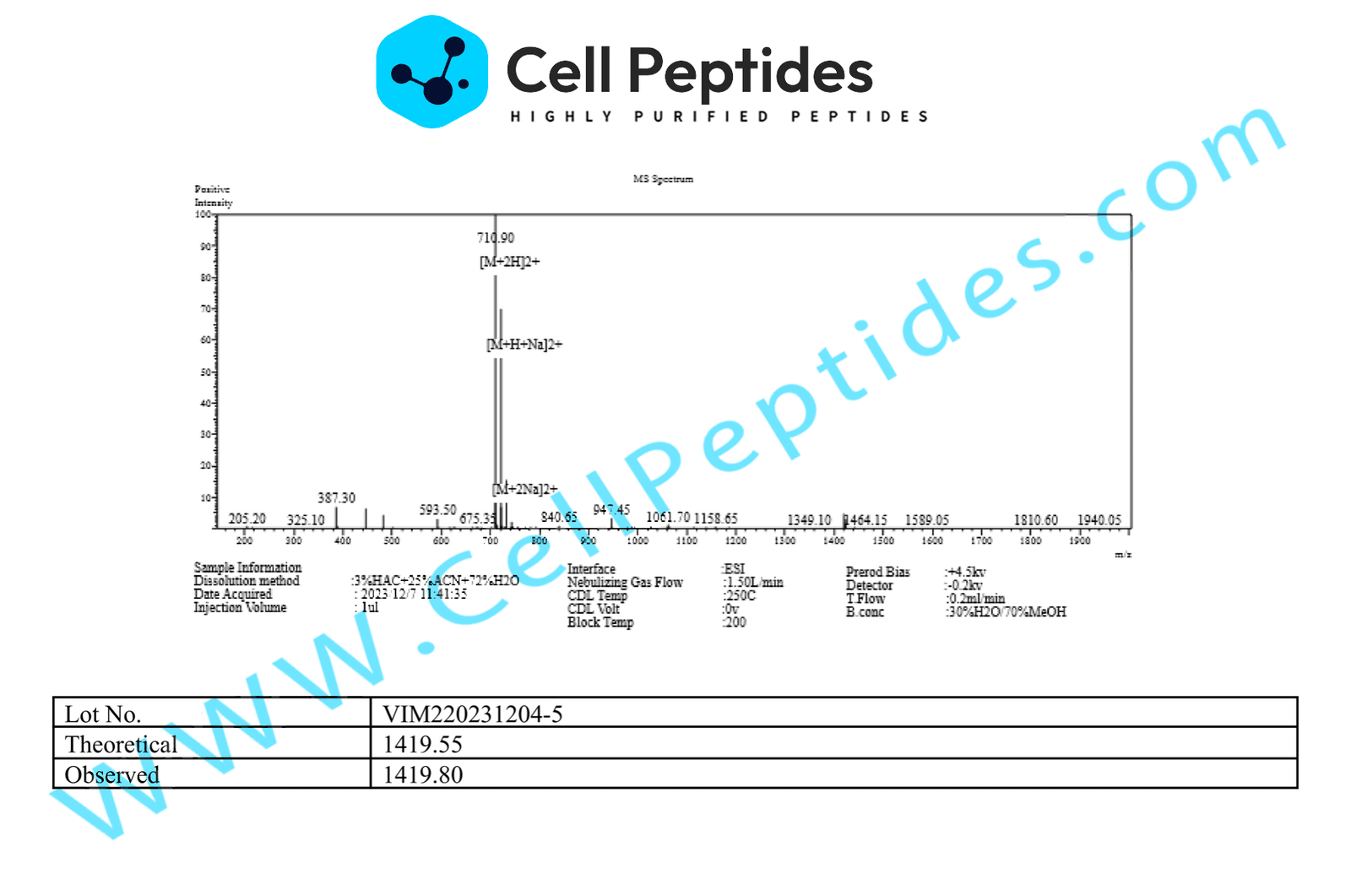
- “Trust but verify.” Our peptides are backed by third-party lab testing, and we’ve got the certificates of analysis that allow you to review the purity of the components as well as the blend’s final composition.
- Our customer support team is always on call. We’ll get all your questions answered, so you can design reproducible studies that push regenerative medicine forward.
As for the boring stuff that can nonetheless make all the difference? We think we do a good job there, too. We accept crypto as well as credit cards and bank transfers, and we make very sure our shipping stays fast, global, and secure (with temperature-controlled packaging).
Why a BPC-157 and TB-500 Blend?
Both peptides have proven healing and regenerative effects, from which it follows that they share potential applications in speeding up injury recovery, too. Combining BPC-157 and TB-500 into a multi-peptide blend doesn’t simply add an extra line of defense, though. These peptides have complementary benefits that make the blend interesting for research that tracks healing from start to finish.
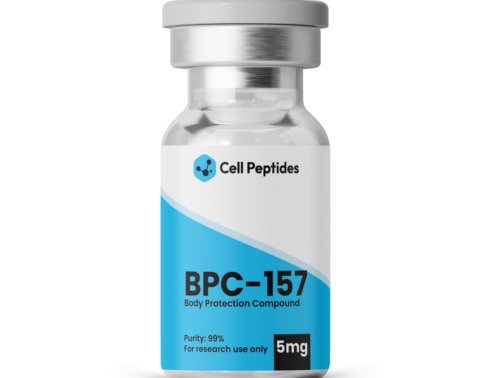
BPC-157 was isolated from a natural protein in gastric juices — and initially mainly researched for gut repair. This peptide rushes the development of new blood vessels around injuries. That gives them more oxygen and nutrients, so they can heal faster. Then, it creates an environment where new tissues can get built. Finally, BPC-157 keeps cells alive for longer.
It’s got some systemic effects, but many researchers primarily think of BPC-157 as a localized healer. Some research, for instance, observes the effect of injections directly into the injured area.
TB-500 is the lab-made answer to Thymosin Beta-4, present in nearly every cell and absolutely essential for healing. It mostly manages actin, which gives cells and tissues their structure and sends repair cells to injuries.
This peptide is basically a 24/7 bodyguard. It goes around looking for suspicious activity — injury and inflammation — and kickstarts healing throughout the body whenever it finds them.
Each peptide also shines within its own area. More about that in the research overview. After a super quick answer? BPC-157 is great at speeding up tendon, muscle, ligament, and bone injuries as well as (obviously, given its origin) stabilizing gut health. TB-500 lowers systemic inflammation to manageable levels and supports tissues as they heal and rebuild.
It’s almost like these peptides were meant to be a team. Our blend makes studying their combined effects possible, at all stages of healing.
Documented Effects of BPC-157 and TB-500: The Foundation of Multi-Peptide Healing Research
Let’s get one thing straight — although research into the combined effects of TB-500 and BPC-157 is just getting started, the component parts have been well-studied already. The existing body of literature helps researchers understand the potential goals of multi-peptide study designs. Curious? Good, because there’s a lot to learn!
The Systemic Healing Action of TB-500 — From Muscles to Skin (and Beyond)
As a Thymosin Beta-4 analog, TB-500 mainly floods the system with the protein actin whenever it’s needed for repair. That allows cells (endothelial cells, keratinocytes, and stem cells) to get to injuries more quickly — so new blood vessels can be built, healthy tissue formed, and wounds can be closed. At the same time, it fights excessive and dangerous inflammation on a systemic level. [1]
Most widely studied so far? Its potential to speed up wound healing. Research so far shows great potential for skin wounds like burns, diabetic ulcers, and surgical incisions — but also corneal injuries. [2, 3]
Beyond that, TB-500 has also been investigated in the area of sports medicine. It’s easy to see why. This peptide hurries muscle repair along and keeps tissues flexible. [4] The most ambitious research goal, however, has to be heart health. TB-4 preserves cardiac function after a heart attack by reducing cell death and getting new blood vessel growth going, research already shows. [5]
BPC-157 for Angiogenesis and Rapid Healing
BPC-157 (that’s “Body Protective Compound” 157 if you didn’t know) was first isolated from gastric juices, so it’s no surprise that early research zeroed in on its ability to protect and heal the gastrointestinal lining. Studies demonstrate that BPC-157 shaves time off ulcer healing [6], and clinical trials investigating its promise as a treatment for inflammatory bowel diseases like colitis also show promise [7].
It doesn’t stop there, though. BPC-157 also speeds up healing in transected tendons (infamously and painfully slow to heal), torn muscles, and damaged ligaments. [8, 9] That’s because it increases growth factors like VEGF and FGF while building the new blood vessels that bring much-needed nutrients to injured tissues.
Faster healing is exciting enough, but because BPC-157 is an anti-inflammatory, the potential for “less unpleasant recovery” is real, too. This peptide, which acts as a first responder after injury, reduces swelling and pain. Sports medicine researchers find it interesting for that reason — and that goes beyond muscles and tendons, because preliminary animal studies show BPC-157 also reduces brain swelling and traumatic lesions in traumatic brain injury [10, 11].
Who Might Consider Researching BPC-157 and TB-500 Blends?
It takes a lot to heal from complex wounds and injuries, and existing clinical approaches often leave patients hoping there were better answers. Our BPC-157/TB-500 blend is for researchers who recognize that — and who are excited to make new discoveries in regenerative medicine.
The potential research applications are (nearly?) endless. They range from sports injuries to local wounds with systemic inflammation, and from surgery recovery to fibromyalgia, neuroprotection, and reduced scarring after a heart attack.
Healing takes time. That part is inevitable. How much time? And how complete can recovery be? Those are the questions research into this dual peptide blend can answer. Assuming it reaches the right lab, of course.
How Are Dosing Protocols Determined for the BPC-157/TB-500 Peptide Blend In-Vitro Research Setting?
Direct clinical data on BPC-157 and TB-500 combination therapy is still limited — but dosing protocols for each of the components are already well-established. They range from 250 to 1500 µg for BPC-157 in most studies, and from 50 to 1000mcg for TB-500. Subcutaneous delivery is the recommended route of administration for both.
Research usually starts at the lower end for both, and doses are increased gradually as the model’s response and tolerance are observed.
A BPC-57/TB-500 study could, for instance, kick off with a dose of 250mcg for both peptides each. If the model response well, the dose can slowly move to 500 µg and then – even higher if needed.
Dosing heavily depends on the research goals and study duration, too. Lower doses can be used to study minor injuries. The higher end of the spectrum comes into play for the study of chronic inflammation calls over longer periods.
Researchers prepare the BPC-157/TB-500 blend for their experiments similarly to any other peptide blend — the lyophilized powder is reconstituted with bacteriostatic water by injecting BAC water down the inner side of the vial slowly. Careful! Lab protocols aren’t optional. Wipe both vials down with alcohol wipes and roll or swirl the mixture until clear. (Never shake. Peptides don’t like that, and doing it anyway could ruin your research before it starts.)
To find out the correct amount of peptide that you need to draw from an insulin syringe (based on how much BAC water you added) – use our peptide dose calculator.
Scientific References
- https://www.pnas.org/doi/abs/10.1073/pnas.89.10.4678
- https://www.sciencedirect.com/science/article/abs/pii/S008367291630005X
- https://www.sciencedirect.com/science/article/abs/pii/S001448350191125X
- https://www.mdpi.com/2073-4409/10/6/1343
- https://www.sciencedirect.com/science/article/abs/pii/S0083672916300048
- https://www.benthamdirect.com/content/journals/cpd/10.2174/138161211796196954
- https://www.jstage.jst.go.jp/article/jphs/108/1/108_FP0072161/_article/-char/ja/
- https://journals.physiology.org/doi/full/10.1152/japplphysiol.00945.2010
- https://link.springer.com/article/10.1007/s12178-025-09990-7
- https://journals.sagepub.com/doi/abs/10.1177/15563316251355551
- https://www.sciencedirect.com/science/article/abs/pii/S0167011509002341


 Cart is empty