What Is 5-Amino-1MQ & Its Mechanism of Action?
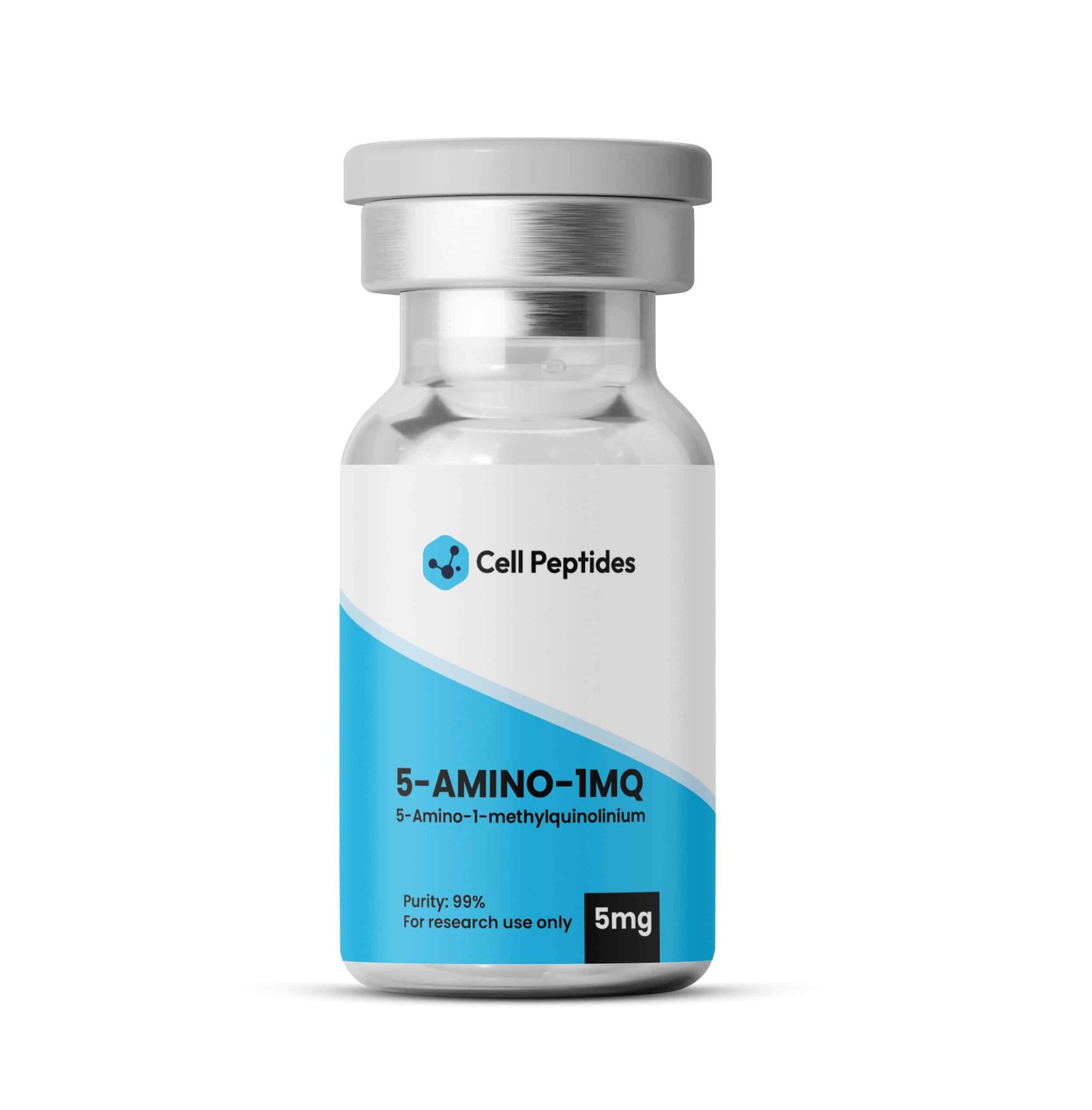
5-Amino-1MQ (5-amino-1-methylquinolinium) is a small-molecule, cell-permeable inhibitor of nicotinamide N-methyltransferase (NNMT) — the enzyme that methylates nicotinamide (NAM) to 1-methylnicotinamide (1-MNA) using S-adenosyl-methionine (SAM) as the methyl donor. By blocking NNMT, 5-Amino-1MQ:
- prevents diversion of NAM away from the NAMPT salvage pathway, which can increase intracellular NAD⁺ availability, and
- conserves the cellular methyl-donor pool (shifting the SAM/SAH balance), with downstream effects on epigenetic methylation and gene expression.
At the enzyme level it binds within NNMT’s substrate pocket with high selectivity; at the cellular level this reprograms metabolic signaling (e.g., sirtuin-dependent pathways) and has been shown in vitro and in rodent studies to lower 1-MNA, reduce adipocyte lipogenesis/size, and increase energy expenditure. In short, 5-Amino-1MQ acts as a metabolic/epigenetic “node” by inhibiting NNMT, thereby impacting NAD⁺ flux and methylation potential rather than directly activating a receptor.
5-Amino-1MQ Effects on the Body & Why It Matters?
It blocks NNMT, an enzyme that wastes niacin (NAM) and methyl groups, so your cells keep more NAD⁺ for mitochondrial upkeep and more SAM for healthy methylation. That upstream tweak can ripple through energy, fat storage, and cellular stress — less biochemical “drag,” more efficient housekeeping. Most evidence so far is preclinical (cells/animals), but the story is consistent: free up resources – systems run smoother.
What it may do:
-
Raise usable NAD⁺ – by stopping NAM from being siphoned off, it feeds the NAD⁺ salvage loop, supporting mitochondrial enzymes (e.g., sirtuins).
-
Preserve methyl donors (SAM) – less NNMT activity means a better SAM:SAH balance, which can steady epigenetic gene regulation.
-
Shrink fat-cell size – adipocytes tend to store less and burn more, trimming hypertrophy (seen in rodent/adipocyte studies).
-
Nudge metabolism toward “burn” – downstream of higher NAD⁺/sirtuins, cells often show higher energy expenditure signals.
-
Tame inflammatory tone – improved redox control and signaling can dial back some pro-inflammatory pathways.
-
Lower 1-MNA levels – a direct readout of NNMT inhibition; useful as a biochemical “proof it’s working.”
Note: These effects come from early research, not medical claims or dosing advice.
5-Amino-1MQ Dosing protocol In-Vitro Research Fields
-
Oral capsules: 50–100 mg/day (often split 25–50 mg BID); some quote 50–150 mg/day and “cycles” of ~8–12 weeks with breaks.
-
“Injectable” protocols sold online: 150–600 µg/day with step-up schedules over 4–12 weeks (note the microgram units—this conflicts with capsule mg regimens and reflects nonstandard products).
Use our peptide dosage calculator in order to find out the correct dose for your model.
Why Choose CellPeptides for Your 5-Amino-1MQ Research?
CellPeptides is an EU-based research chemical company who tries to live up to that exciting legacy. We provide pharmacological-grade SLU-PP-332 with the potential to form the basis for brand new discoveries.
With us, you get:
- ≥99% purity — as pure as it gets, and completely ready for your ambitious study design.
- Certificates of analysis from independent labs, so you can check purity and composition for yourself.
- Fast, global, insured, and safe shipping. With tracking, of course.
- Flexibility when it comes to payment. Don’t like credit cards or bank transfers? We take crypto, too.
- A knowledgeable support team that will get your questions answered — if there’s a glitch with your order, but also if you’d like to run your research design by us.
We handle the reliability (our 5-Amino-1MQ is synthesized in an EU-based WHO/GMP and ISO 9001:2015 certified lab), so you get the compound you need to contribute to the future of science. Every time.
Scientific References


 Cart is empty