Why Choose CellPeptides’ Semax Peptide?
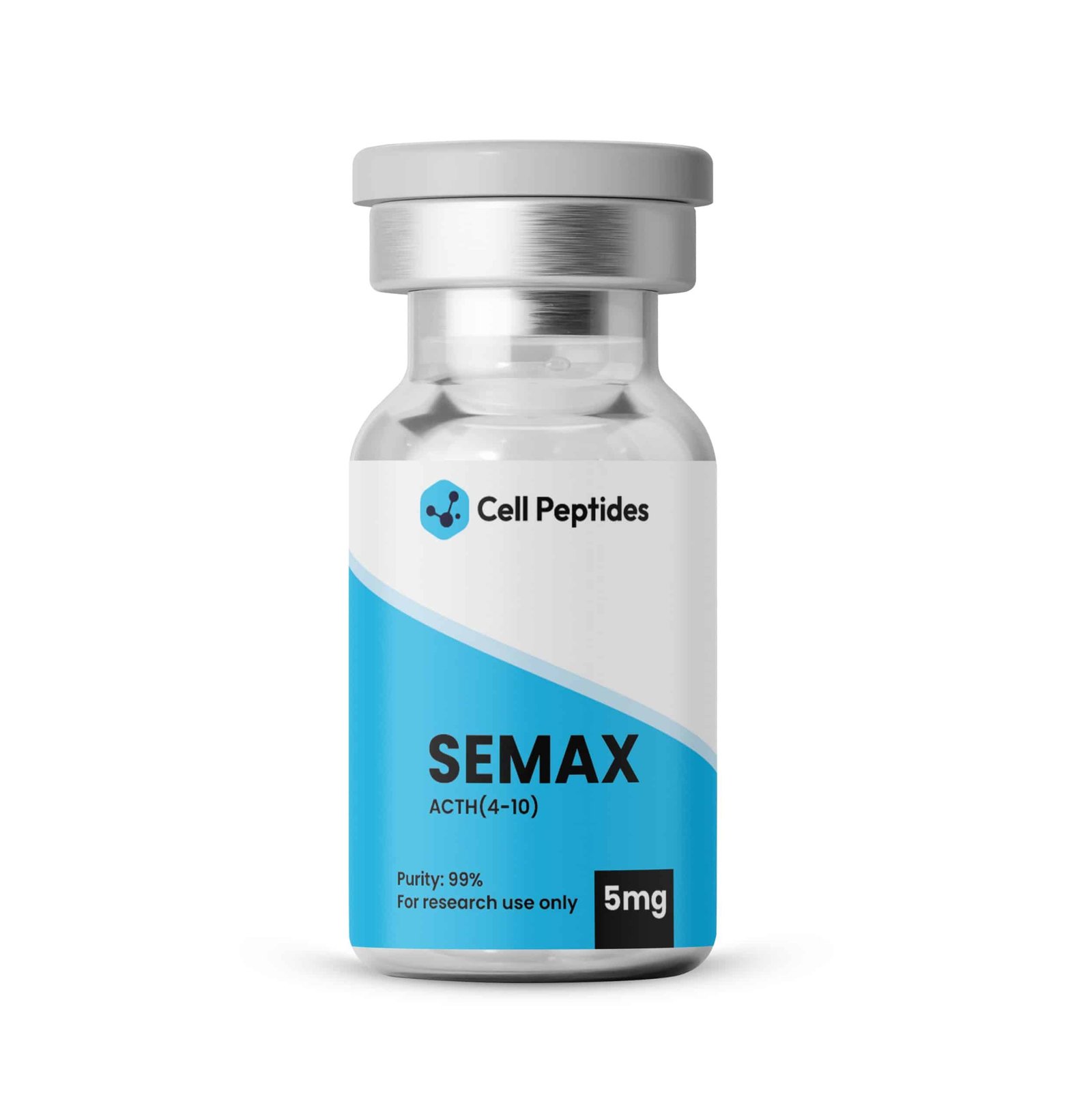
Semax is remarkably powerful — its effects on neurotrophins like DBNF can be observed even at low doses. Purity and composition are everything, though. It takes immense technical expertise to synthesize Semax, and serious research calls for nothing less than perfection.
Start your research with CellPeptides, and benefit from:
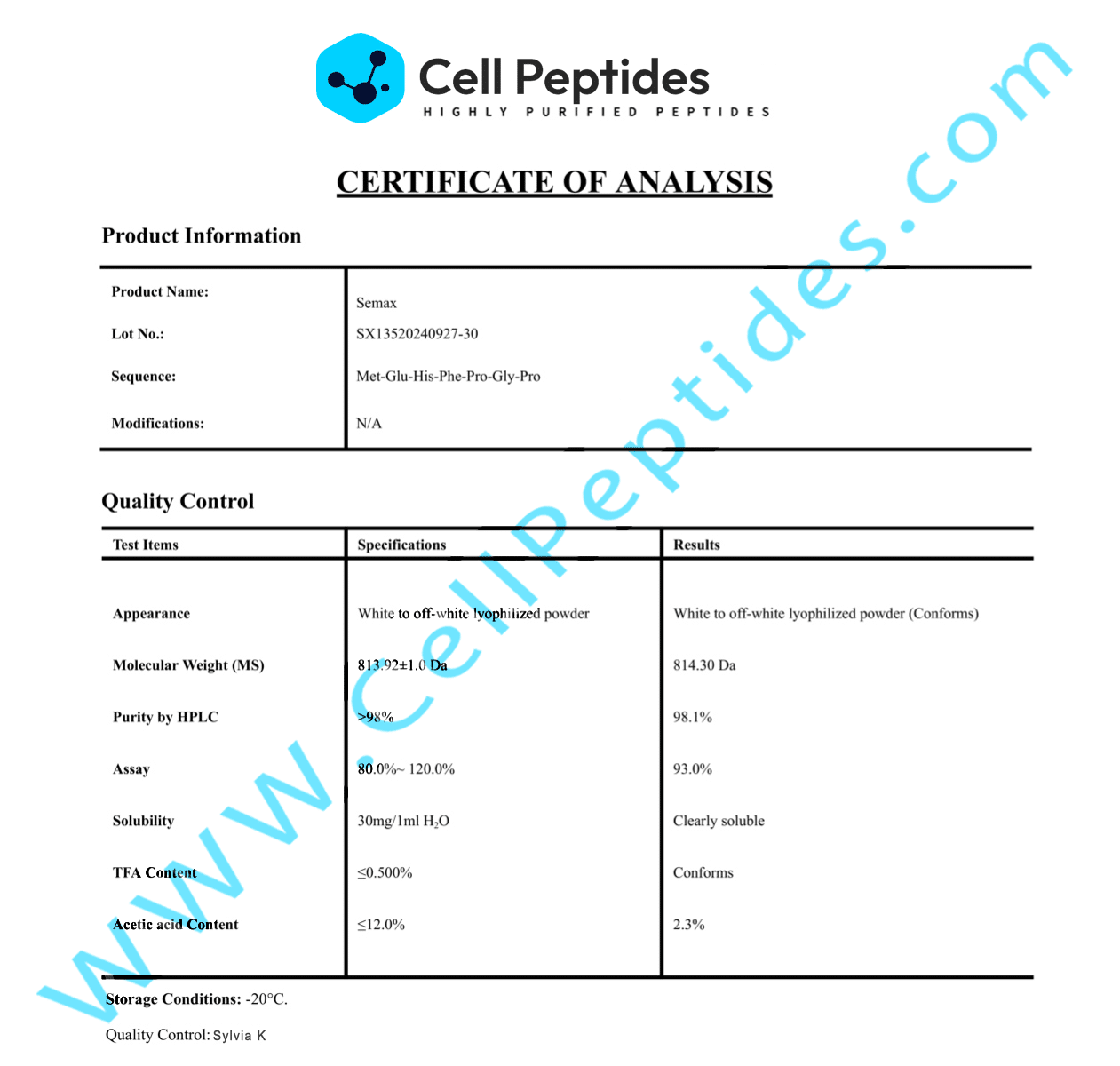
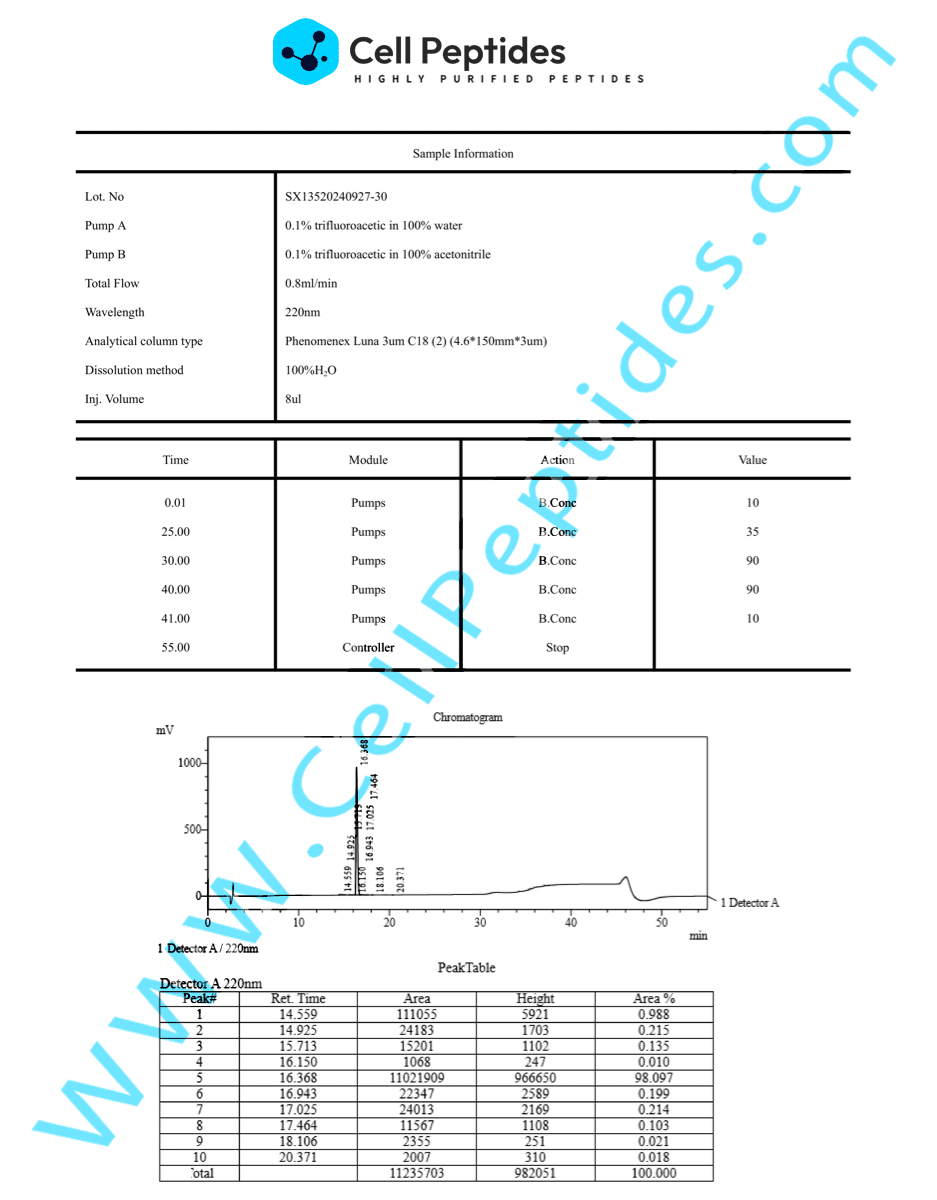
- Pharmaceutical-grade Semax — ≥99% purity.
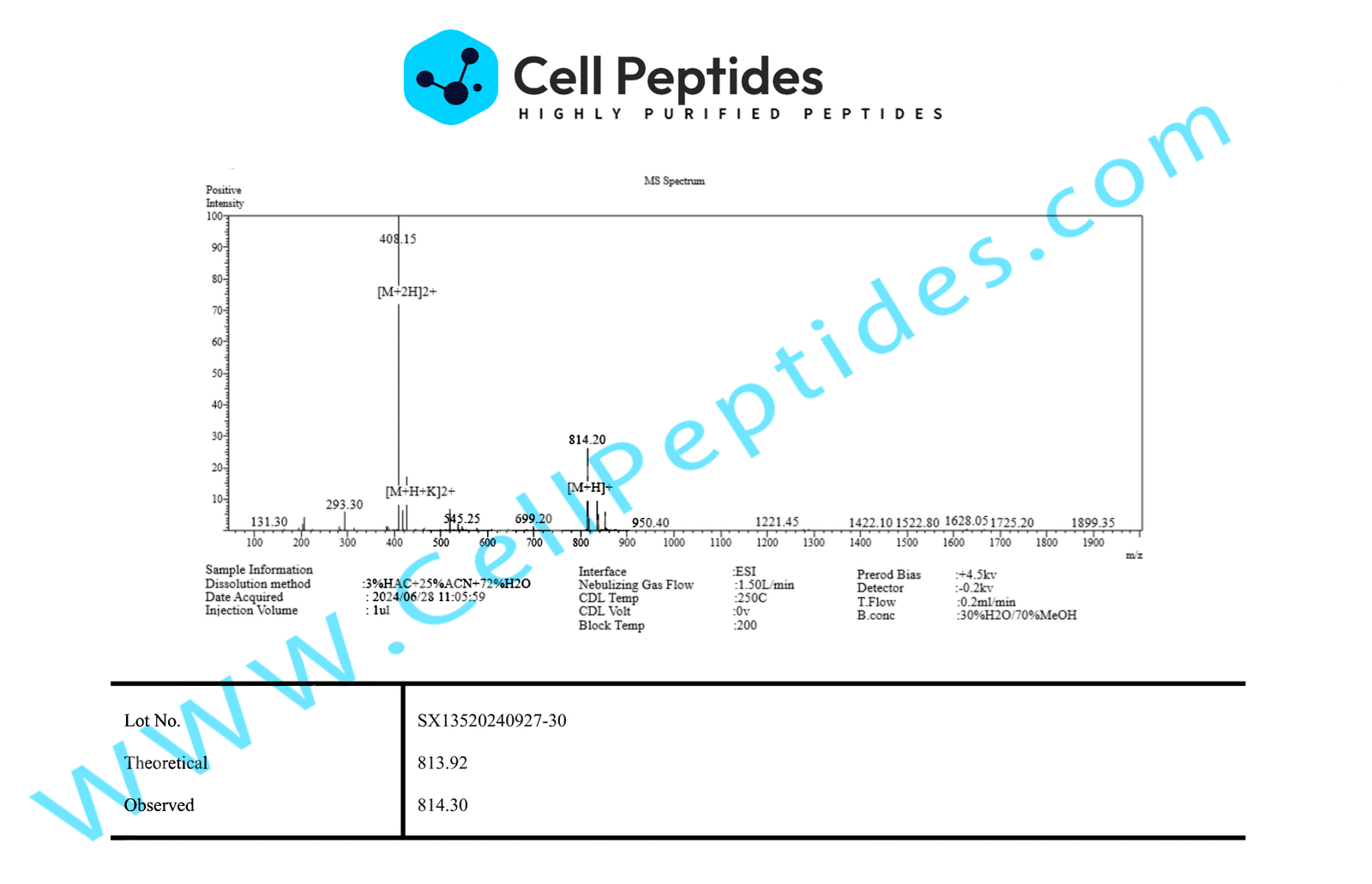
- Independent lab testing that allows researchers to check purity and composition for themselves with transparent, up-to-date certificates of analysis.
- Insured global shipping — fast and with full tracking.
- Flexible payment options that don’t just include credit cards and bank transfers, but crypto, too.
And if you have questions? We’re a science and research company that makes the peptides used in rigorous scientific studies — in our WHO/GMP and ISO 9001:2015 certified lab in the European Union. It goes without saying that we know a lot about peptides, so if you want a second pair of eyes on your study design, we’re looking forward to that kind of lunchtime reading. We’re happy to give you some feedback.
How Does Semax Work?
Some compounds are purpose-built from scratch. Others? Discovered accidentally. The Russian team that went on to develop Semax started off studying how, precisely, adrenocorticotropic hormone works. As its name already hints at, ACTH is a hormone that, among other things, produces the stress hormone cortisol — but Dr Myasoedov and his team noticed that fragments of it boost cognition and memory. Without the stress-inducing effects.
Those fragments went on, after decades of research, to become Semax. It’s a direct synthetic analogue of ACTH (4-10), but stabilized to protect it from the enzymatic degradation that would make it impossible to study and use in clinical contexts.
Just like its natural counterpart, Semax upregulates Brain-Derived Neurotrophic Factor and Nerve Growth Factor — which boost neural connections and increase neuroplasticity. That’s why it helps with focus, learning and memory. The other benefits? Semax plays a part in bringing dopamine and serotonin back into balance, too. As it does that, the compound also fights inflammation and protects the brain from oxidative stress. Some studies even demonstrate that it improves blood flow to the brain. Hence its use post-stroke.
No wonder Semax went on to be such an important treatment option in Russia and Eastern Europe.
Semax Research So Far: Observed Effects on Cognitive Function
Semax is a compound with a long history. By this point, decades of clinical use on its “home turf” have joined decades of research. The moral? The existing body of science is deep — and a lot is known about the observed effects and potential applications of Semax.
That shouldn’t stop researchers who are wondering if there are still new breakthroughs to be made, though, because the answer is yes. There are. Need an overview of some of the most exciting findings so far? Start here.
Semax in the Treatment of Stroke and Brain Injury
The original and clinically-approved use case for Semax in Russia. Years of research show Semax to have powerful neuroprotective effects. For stroke and brain injury victims, it opens the door to faster healing — but also more complete recovery. Studies have shown that Semax limits the area of brain damage after stroke, and that the neuroplasticity it induces leads to improved cognition. [1, 2]
What’s more, its mechanism — boosting BDNF, fighting inflammation, improving blood flow — makes for an impressive intervention that counters the damage that unfolds in the brain after stroke or TBI.
Better Mental Performance, Even Under Extreme Stress
Brains are weird. They often fail to perform when it’s most important. Stressful, demanding, high-stakes situations should, ideally, automatically cause hyper-focus and faster processing — but they don’t. Semax has been shown to help with both, and that’s exactly why researchers have been so interested in its potential to help people in high-stress jobs perform better. That includes astronauts and pilots.
It’s normal to recoil from stress, to “chicken out.” Studies demonstrate that Semax helps to counteract that natural instinct and set the stage for sharper mental focus even under extreme pressure. [3, 4] Not all stressful situations are “life or death,” though. Would Semax also improve test-taking scores or job interview outcomes? That’s a question many investigators are curious about.
Semax in the Context of Mood Disorders
If Semax can improve mental sharpness in objectively risky, stressful situations, what about mood disorders that falsely tell the brain to be scared of danger when there is none? Emerging research has looked at Semax for its potential applications in treating anxiety and depression, too — with promising results. Semax regulates dopamine and serotonin, both implicated in mood disorders, while also fighting brain inflammation. Studies into the topic so far show that Semax brings back the balance that’s been disrupted in these conditions. [5, 6]
Protecting Brain Health with Age — Alzheimer’s, Parkinson’s, and More
Pay attention, because neurodegenerative diseases are the next big focus in Semax research. Here’s why that’s true. People with Alzheimer’s, Parkinson’s, and similar conditions of cognitive decline linked to neuronal death and dysfunction consistently have low BDNF levels. They also suffer from damage caused by chronic inflammation. Semax targets both. Early models show improved memory and slowed disease course progression. [7] Given the lack of treatment options, future research into this field could bring new hope to people affected by these conditions.
Who Might Consider Researching Semax?
It’s already an approved prescription medication in Russia and countries all over Eastern Europe — but in the West, Semax remains a compound filled with future promise. That research goes further than its established applications, like treating optic nerve atrophy and supporting stroke recovery.
Semax is also of interest to researchers investigating:
- The treatment of Alzheimer’s, Parkinson’s, and other neurodegenerative diseases — and sharper cognition later in life more generally.
- Sharp mental performance under stress.
- ADHD — Semax is researched as an alternative to the stimulants that let many patients down.
- Stress-linked mood disorders — anxiety and some cases of depression, but also potentially PTSD.
Basically? If tweaking brain chemistry for optimal performance is part of your research direction, Semax deserves your full attention.
Common Dosing Protocols for Semax Researched In In-Vitro Settings
Decades of research and clinical use make designing future studies into the effects of this nootropic peptide easier for investigators. Be careful, though, because dosing protocols heavily depend on the research goal and model. It’s usually calculated on the basis of the test subject’s body weight. Literature most often cites doses between 0.5 and 800 mg, wherein studies start with a lower dose to observe the model’s initial response before titrating up. Again, though, the appropriate dose depends on the study design and goal. All studies should begin with a detailed literature review.
Dry Semax can be used for multi-dose applications when it is reconstituted with bacteriostatic water (never anything else!) — injected into the vial slowly, with the needle angled at the vial wall. Once prepared, refrigeration keeps Semax safe for use over the course of a 1-2 month-long study. Discard if cloudy.
FAQs
Is Semax a stimulant?
Short answer? No. Structurally, Semax has nothing in common with stimulants like caffeine. It doesn’t excite the nervous system. It’s a nootropic peptide that increases BDNF and regulates neurotransmitter functionality. Semax has some of the same effects as stimulants (better memory and alertness) but it achieves those differently.
What is known about the safety profile of Semax?
Favorable. Semax has been an approved prescription medication in Russia for years, and because it’s both effective for its applications and well-tolerated by patients.
Does Semax positively impact mood and happiness?
Some studies have observed that Semax appears to improve subjects’ mood, because it regulates serotonin and dopamine. This is one of the reasons it’s under investigation for potential future applications in the treatment of depression.
How long before the effects of Semax can be observed in research studies?
Immediate effects can often be seen within hours, but longer term use is required before data can be collected about neuroprotective effects.
Scientific References
- https://www.mdpi.com/1422-0067/22/12/6179
- https://apcz.umk.pl/JEHS/article/view/59336
- https://link.springer.com/article/10.1134/S1062359018040040
- https://www.researchgate.net/profile/Natalia-Levitskaya/publication/235905924_Semax_prevents_functional_impairments_of_avoidance_response_in_rats/links/00b49516cfd3cabcca000000/Semax-prevents-functional-impairments-of-avoidance-response-in-rats.pdf
- https://sibmed.elpub.ru/jour/article/view/1105?locale=en_US
- https://www.benthamdirect.com/content/journals/cdth/10.2174/1574885517666220831155411
- https://link.springer.com/article/10.1134/S1819712415040066


 Cart is empty