Why Choose CellPeptides’ Selank?
Got a study design ready? Your peptide research is only ever as reliable as the compounds you base your data on. We’re a science and research company based in Switzerland — where we run a WHO/GMP and ISO 9001:2015 certified lab — and we’ll make sure the quality of the compound you’re studying is as dependable as your hypothesis.
Start your peptide study with Selank from CellPeptides, and benefit from:
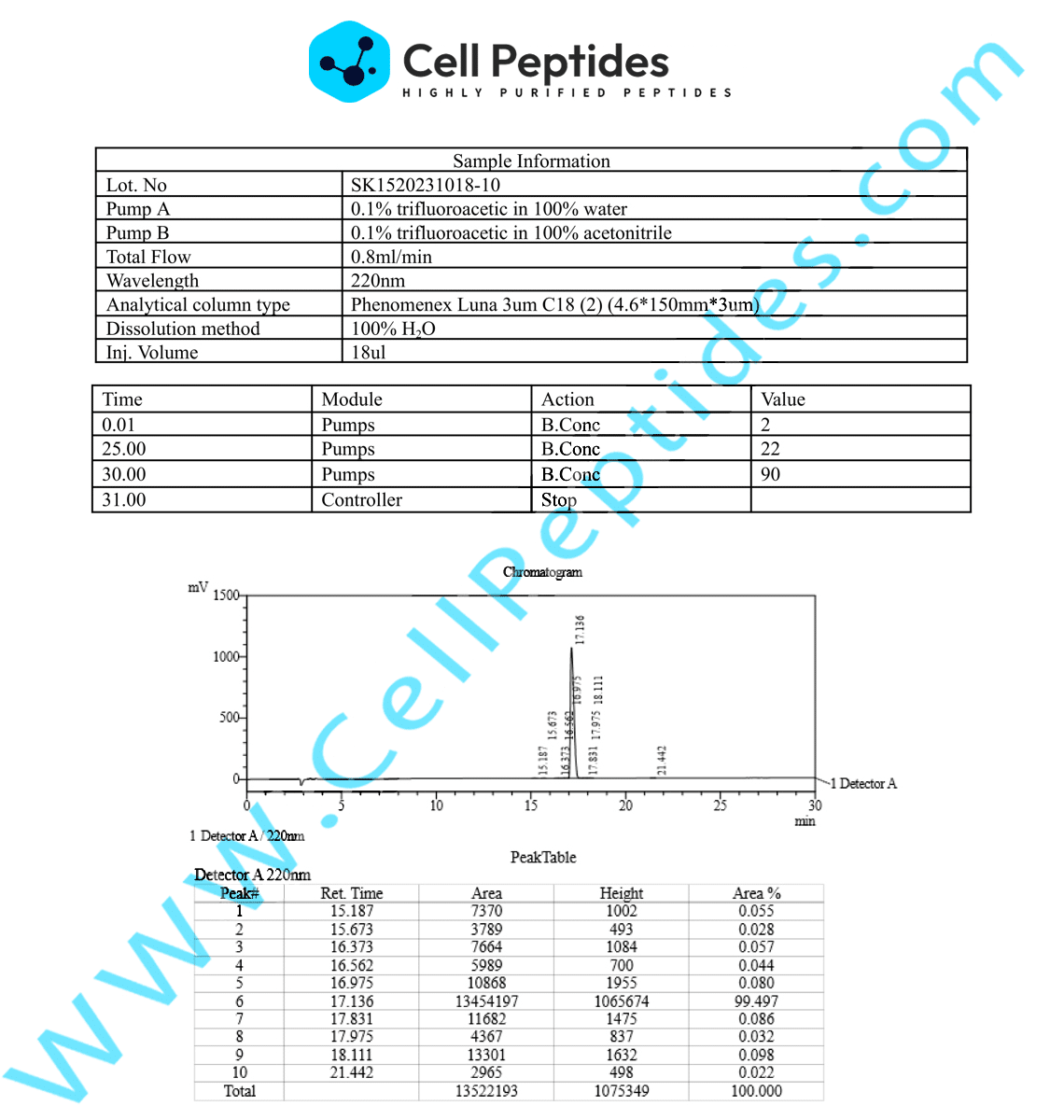
- Pharma-grade Selank — ≥99% purity guaranteed, so you never have to worry about skewed results.
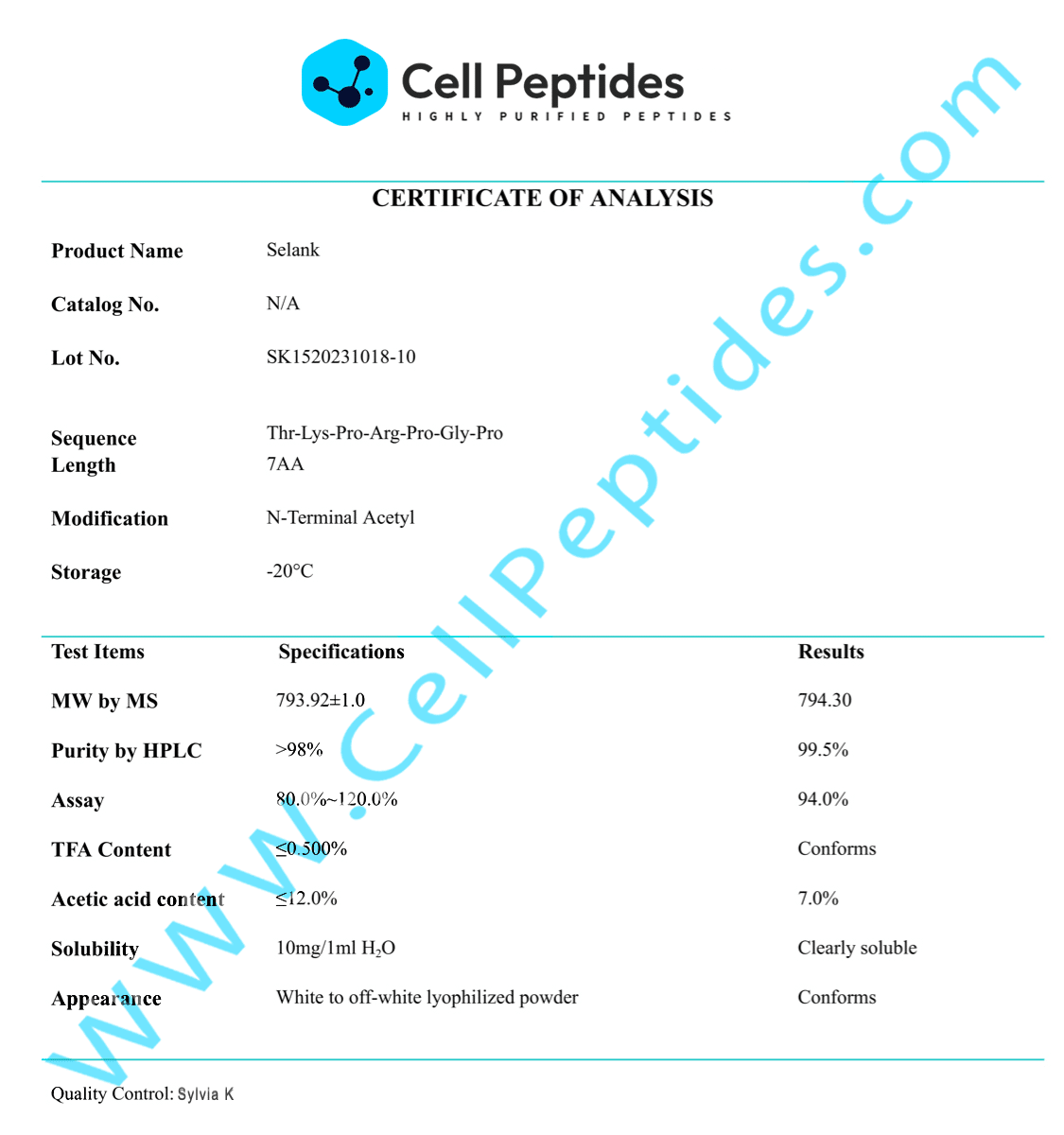
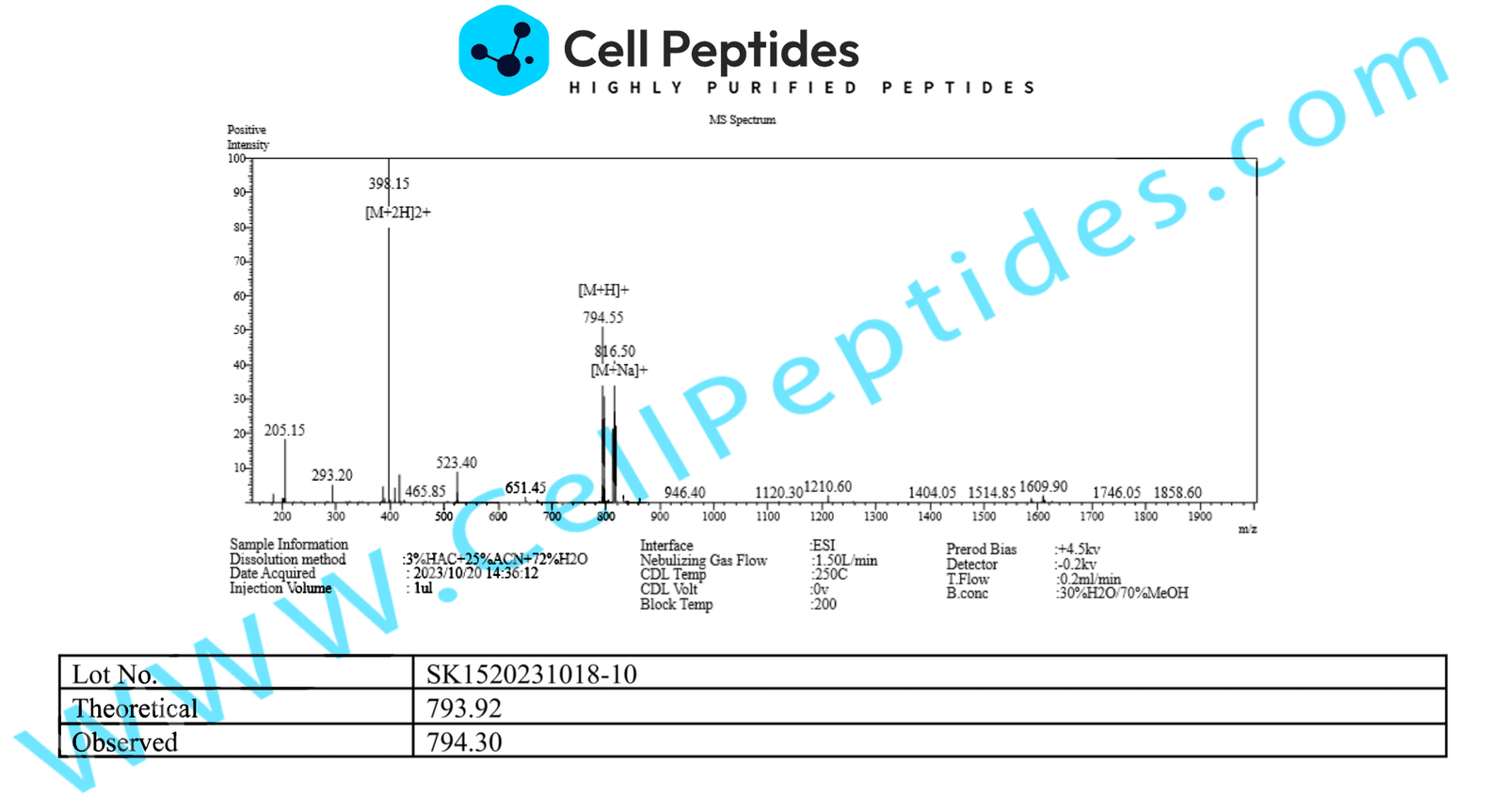
- Independently verified — with third-party lab reports you can review to check purity and composition yourself.
- Fast global shipping with insurance and tracking.
- Flexible payment options — including crypto.
- A knowledgeable support team that gets your questions answered quickly.
Long-term studies depend on a reliable supply chain. We run a tight ship, so your science won’t be thrown off by unexpected interruptions.
How Does Selank Work?
Selank resulted from the same research as Semax — Russian pharmacologist Dr Nikolai Myasoedov and his team at the Russian Academy of Sciences developed it after studying the natural analogue Tuftsin. Its main job is to support the immune system by triggering the production of cells that hunt pathogens down to destroy them, but it also does something else. Boost brain function and soothe anxiety.
Selank is a modified version that stabilizes Tuftsin (so it can be used in research) and strengthens its effects.
Curious what they are, exactly? That’s where Selank gets complicated. Because it does a lot.
Regulation of the GABA system — for balanced anxiety-fighting action that doesn’t sedate or induce addiction — is the first benefit. Selank also, however, normalizes serotonin and dopamine levels, making stressful situations more manageable.
Beside that, Selank studies have demonstrated that the peptide upregulates BDNF — needed for memory-building and learning. That puts it firmly into nootropic territory. Unusual for an anti-anxiety compound, but welcome. Selank is still under study in this area, but this is the mechanism hypothesized to be associated with its observed antidepressant effects.
Finally? Researchers discovered, over the course of other studies, that Selank prevents enzymes from breaking down enkephalins. These natural opioid peptides dull the experience of pain and stress. (Yes, “feel-good chemicals.”)
Intrigued yet? Wait until you hear what studies have looked at so far.
The Most Exciting Selank Research to Date — Observed Effects on Anxiety, Mental Performance, Pain, and Beyond
Selank is an approved prescription medication in Russia and other former Soviet countries. There, it’s mostly used to treat anxiety and fatigue related to illness and mood disorders. Selank has a long history in those areas, but newer research has also investigated other potential applications. Need to get up to speed before you define your own hypothesis? Let’s take a look at some of the most interesting research.
Selank as an Alternative to Sedative Anti-Anxiety Treatments
The anti-anxiety potential has already been well and truly established. Selank studies consistently show that this neuropeptide fights anxiety. The fact that Selank doesn’t have the same sedating, addictive effects as benzos (still a common treatment option) gives it huge potential as an alternative treatment option.
Even more interesting is the finding that Selank can actively block the sedating effects of two benzos, Diazepam and Olanzapine — meaning patients can potentially reap their benefits without their side effects if they are simultaneously treated with Selank. [1]
Better Cognitive Performance — Memory, Learning, and Attention
Anxiety itself impairs cognitive performance, but research has also looked at the nootropic potential of Selank beyond that. Its effects on BDNF and neurotransmitter balance give it the potential to boost memory, learning, and attention. So far, research has focused on brain function under stress. [2, 3] Could Selank also give cognition a power-up with baseline stress levels? Future investigations are sure to pay attention to that possibility.
Selank in Stroke Recovery and TBI
It’s a peptide that fights inflammation, protects brain tissue, and creates a neuroplastic state more open to learning and adaptation — all important after a brain injury. Studies were always going to look at its potential to help people heal faster and more completely after stroke and TBI. That’s still an active area of research (in which Selank and Semax are often studied together, especially in Russia), but the results have been impressive so far. Selank seems to improve recovery, specifically brain and motor function, after stroke and trauma. [4, 5]
Selank for Immune Health
This one goes back to Tuftsin, on which Selank was modeled. Research confirms that Selank impacts inflammatory processes — it increases IL-6 (which boosts immune cell production), and lowers TNF-α (which causes harmful inflammation). [6]
Could it be used to treat viral infections, strengthen immune systems weakened by illness, or even become an everyday immune booster? That’s a real possibility that calls for further study.
The Role of Selank in Pain Relief
Research into Selank’s analgesic effects is still in its early stages, true, but studies do exist — and it’s one of the most exciting areas of investigation because it works directly in concert with nature itself. It’s already been demonstrated that Selank slows the degradation of enkephalins. These opioid peptides kick in during times of stress and pain to make a bad situation slightly more bearable. [7] Selank has a support role here. It’s not a painkiller, but it might help the body’s own pain relief system stay active for longer — and thereby still achieve an analgesic effect.
Who Might Consider Researching Selank Peptide?
Demonstrated effects — some of which Selank is already in clinical use for in Russia and beyond — include fighting anxiety, protecting and regenerating brain health, strengthening the immune system, and improving focus.
Selank is most likely to be of interest to researchers looking at future applications in the treatment of:
- Anxiety, depression, and stress — including extreme stress.
- Chronic fatigue syndrome, fibromyalgia, and disorders where weakened immune function causes brain fog. (Pain relief is an interesting possible side benefit here.)
- Recovery from traumatic brain injury and stroke.
Selank doesn’t only have potential as a treatment for disorders, on the other hand. Research that looks into its nootropic effects — for optimization, not healing — could be equally revolutionary.
Common Dosing Protocols for Selank In-Vitro Research Setting
Dosing protocols are, thanks to an impressive body of research and a history of clinical use, fairly well-established. They heavily depend on the research goal and model. Daily doses of 100 to 600 mcg per day are often cited in the literature. Intranasal administration is common, but subcutaneous administration is also often pursued.
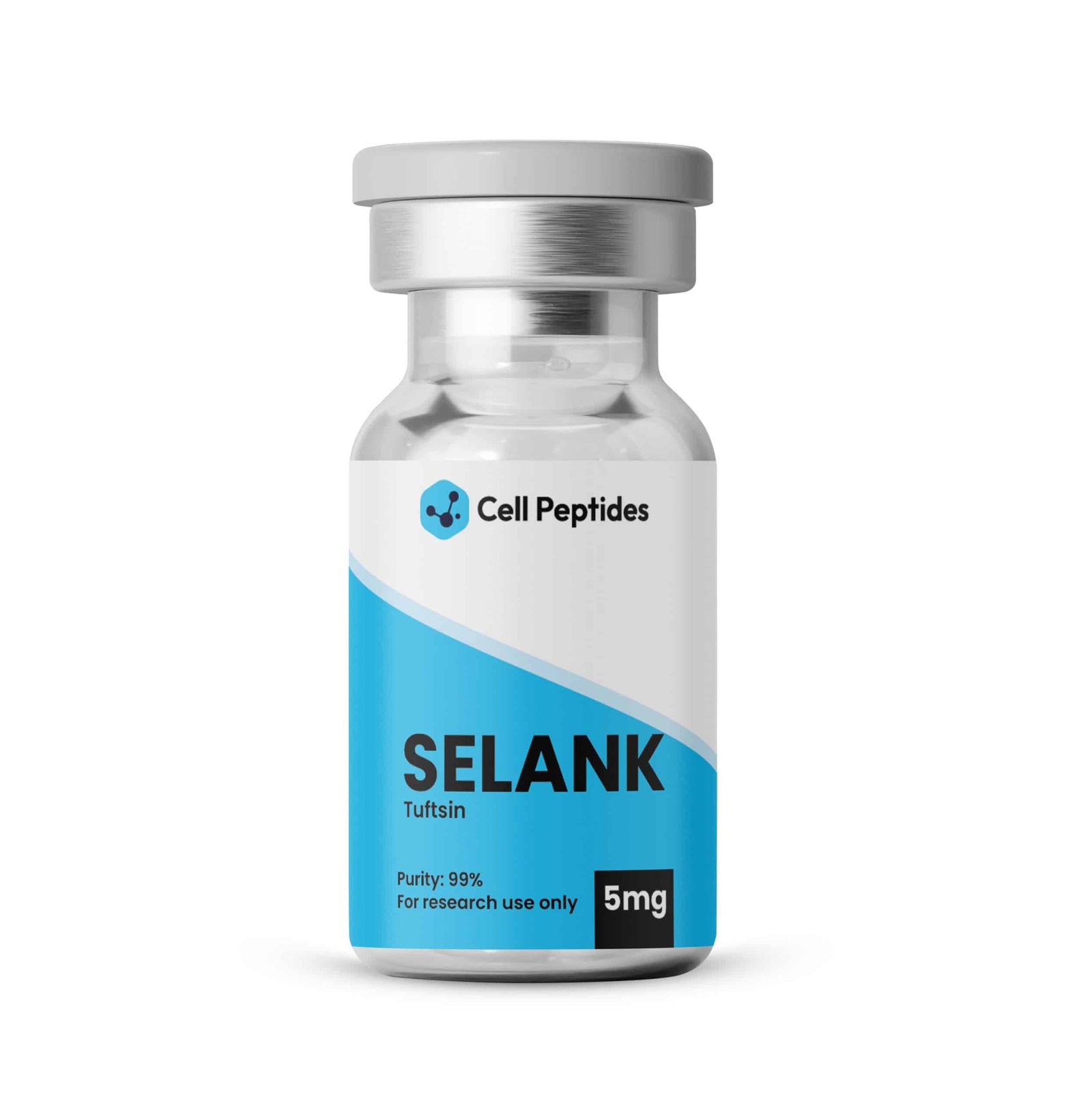
In that case, dry Selank (shipped that way for stability) has to be prepared for research through reconstitution. Slowly inject bacteriostatic water — such as 2 mL for a 5 mg vial — into a sterile vial of Selank after wiping both down with alcohol wipes. Selank might have an observed anti-stress effect, but it’s more vulnerable itself. Roll or swirl the vial, rather than shaking it. Be patient, because this takes a while.
Once the solution is clear, refrigerated Selank is safe for use in multi-dose applications for longer-term studies. It typically stays stable for ~30-60 days.
A tool you might find useful is our peptide dosage calculator. Feel free to check it out.
FAQs
Does Selank have potential as an anti-inflammatory peptide?
Selank studies have shown that it influences cytokine production. It reduces the action of pro-inflammatory cytokines while upregulating others, which calms overactive immune responses and brings the body back into balance. So yes.
Have studies observed any effects on sleep?
Not directly — but less anxiety does generally lead to better sleep. That explains anecdotal reports that Selank improves sleep quality.
What are the potential neuro-cognitive applications of Selank?
Selank is primarily a non-sedative anxiolytic. It improves functioning under stress and boosts DBNF for better learning and neuroplasticity. Beyond the potential application in mood disorders and intense stress, Selank has also been studied in the context of recovery from stroke and traumatic brain injury.
Why are Selank and Semax studied together?
Selank is calming and anti-inflammatory. Semax, developed by the same team of scientists, is a stronger nootropic. The complementary effects make them an interesting combination for researchers.
Scientific References
- https://www.ingentaconnect.com/content/ben/ppl/2018/00000025/00000010/art00006
- https://link.springer.com/article/10.1007/s10517-019-04588-9
- https://link.springer.com/article/10.1134/S0022093008030101
- https://onlinelibrary.wiley.com/doi/abs/10.1002/med.21704
- https://journals.eco-vector.com/2307-9266/article/view/111716
- https://link.springer.com/article/10.1134/S1062359019040071
- https://link.springer.com/article/10.1023/A:1017979514274


 Cart is empty